Why is the toddler stage the riskiest?
Two curves cross badly between roughly one and four years old. The child's mobility explodes — lurching, grabbing, chasing, falling — while their impulse control and ability to read a dog remain near zero. A toddler cannot tell a relaxed dog from a tolerating one, will pursue a dog that walks away, and expresses love the mammal way: arms around the neck, face against face.
Meanwhile the geometry is unforgiving: a toddler's face sits exactly at a medium dog's mouth height, which is why bites to this age group are so often facial and why "it was just a warning snap" can still mean stitches. None of this makes the dog bad or the child naughty — it makes unmanaged toddler-dog contact structurally risky, in every home, with every dog. Accepting that without blame is the foundation of the whole system.
What does active supervision actually mean?
Here's the phone-down honesty test: if you're scrolling, cooking or answering email in the same room, you are present, not supervising. Active supervision means eyes on the interaction, close enough to intervene within a second, whenever toddler and dog share floor space. A bite takes less time than reading one message.
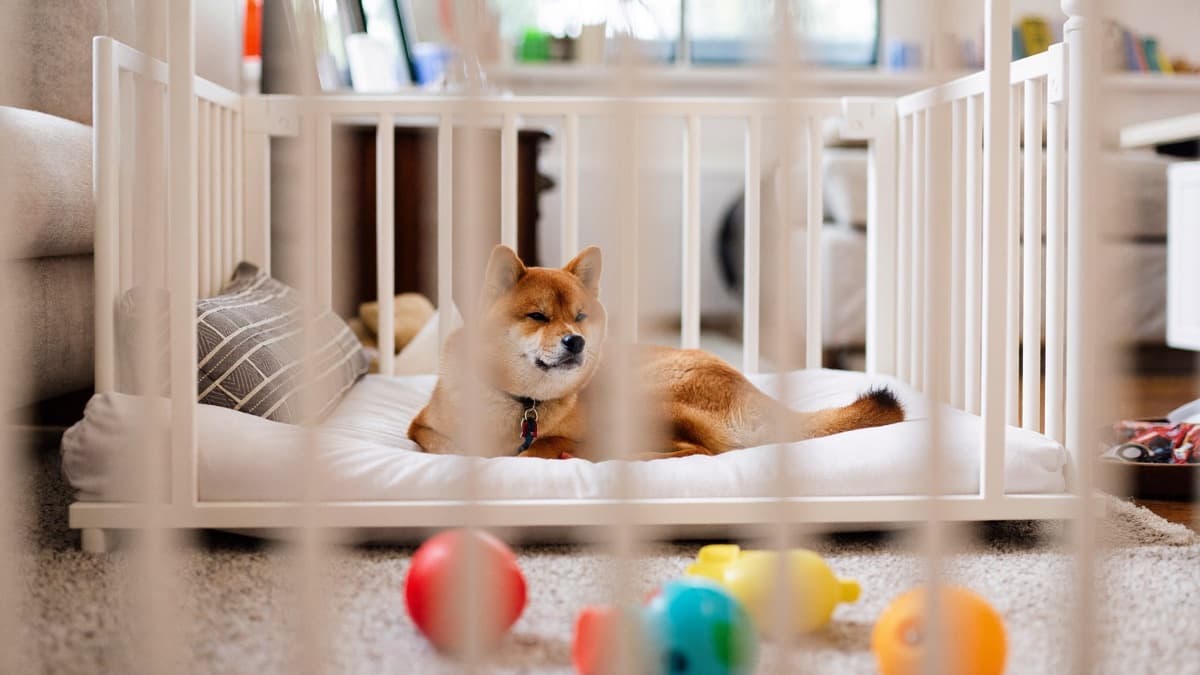
Because nobody can do that for twelve hours a day, the real system is honest triage: active supervision or physical separation — nothing in between. When you can watch, watch fully. When you can't, a baby gate, playpen or closed door does the job with zero willpower. Gates are not exile; a gate is love with hinges — it lets the dog stay part of family life, seen and included, without being available for grabbing. Set the default so the safe option is the lazy option.
Which rules can a two-year-old actually follow?
Not many — so pick the few with the highest payoff and rehearse them as games:
| Rule | Why it works |
|---|---|
| One-finger stroking on the dog's back or shoulder | Physically impossible to grab, pull or hug with one finger; toddlers find it a fun "special trick" |
| No hugging, no kissing dogs — ever | Most facial bites to young children happen during hugs and kisses. Say it plainly, enforce it kindly, model it yourself |
| We don't touch dogs who are eating, sleeping or in their bed | Removes the three highest-risk ambush moments |
| When the dog walks away, we let it go | Stops the pursuit that turns tolerance into a cornered dog |
Keep instructions positive and concrete: "one finger, like this" lands at two years old in a way "be gentle" never will. And expect the rules to fail sometimes — toddlers are toddlers — which is exactly why the adult and the gate remain the actual safety layer.
Why does my dog need an escape route?
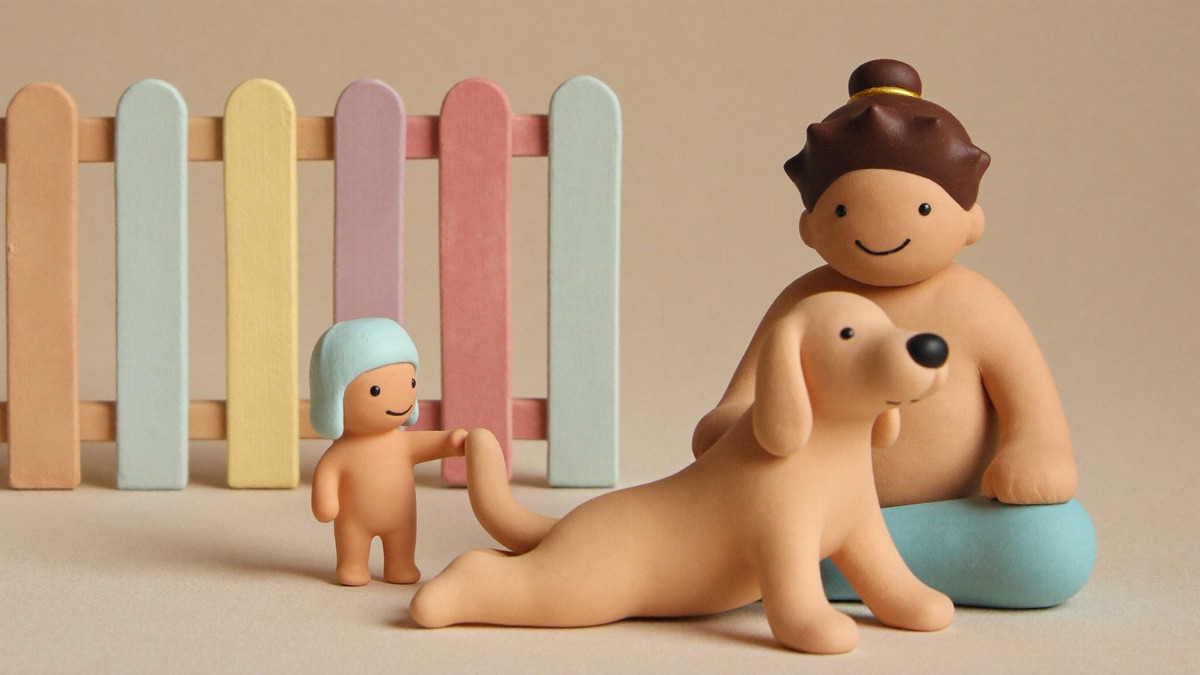
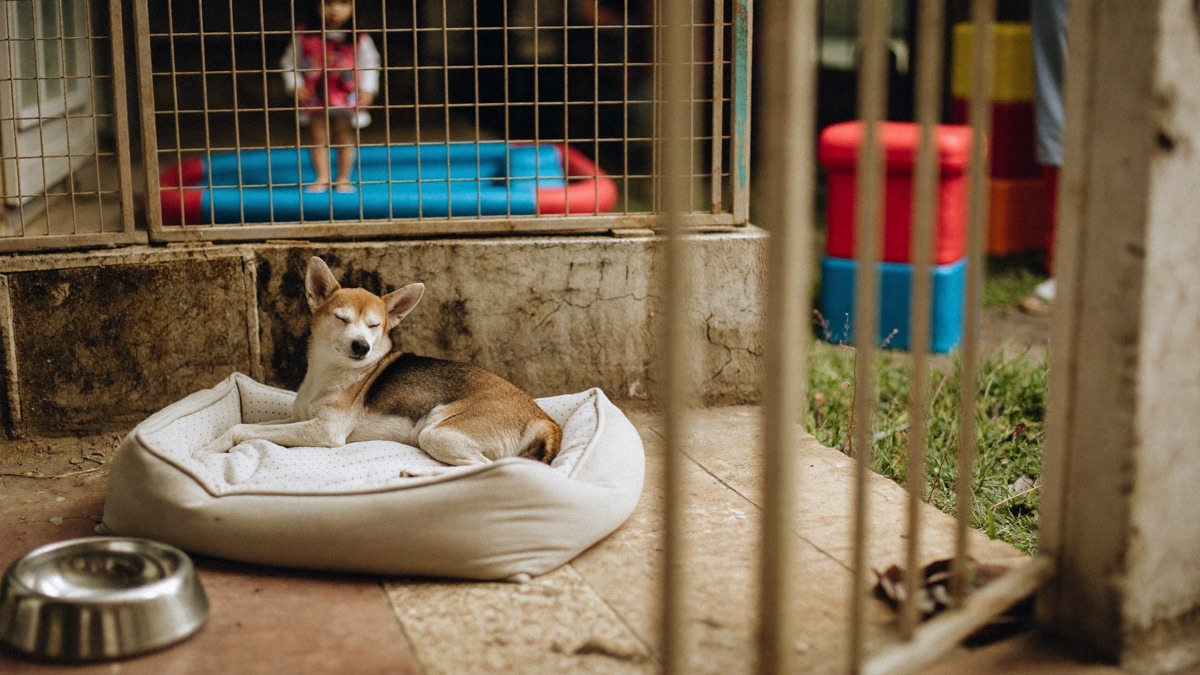
Because a dog that can leave, will — and a dog that can't is left choosing between enduring and escalating. Bites happen in corners. So build guaranteed exits into the floor plan: the dog's bed, crate or mat in a space the toddler cannot reach, clear paths out of every shared room, and a household law that a dog on its bed is off-duty and untouchable. Feed the dog behind a barrier so mealtimes are never a standoff. In a smaller flat this matters even more, not less — when square metres are tight, a gated corner is what gives the dog somewhere to opt out to.
What are the dog's please-help-me signals?
Dogs almost never bite "out of nowhere" — they ask for help first, quietly, and the requests escalate only when ignored. Learn the early whispers: lip-licking with no food around, yawning when not tired, head turned away, sudden ground-sniffing, showing the whites of the eyes, shaking off as if wet, getting up and leaving. Our guides to dog calming signals and dog body language cover the full vocabulary with pictures.
When you see a whisper, act on it: cheerfully call the toddler away, give the dog its exit, and mentally thank the dog for asking politely. Every whisper you answer teaches the dog that polite requests work — which is precisely what keeps the louder options off the table. A growl, if it comes, is the dog's last polite word, not its first offence: separate calmly, never punish it, and if growls or stiffness around your toddler recur, get a qualified force-free professional in quickly. Between the freeze rules for older kids in dog nipping at children and the systems here, the goal is the same: a childhood of good dog memories, built on management rather than luck.