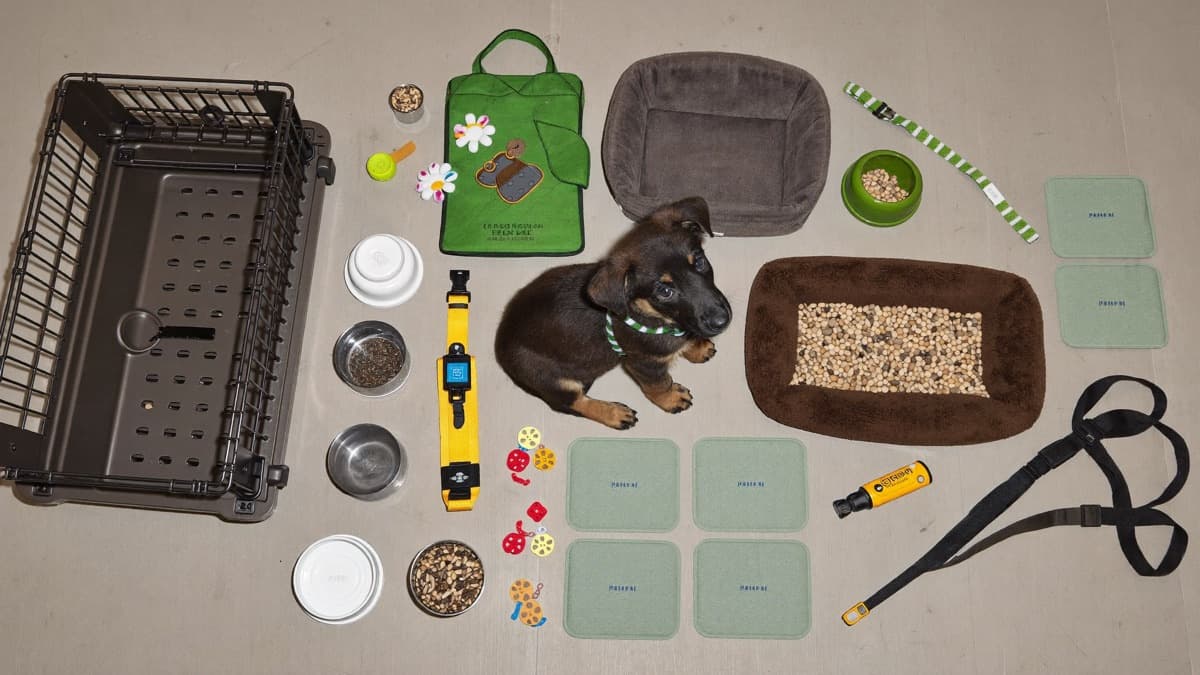
What should you buy before the puppy arrives?
| Item | S$ range | RM range | Notes |
|---|---|---|---|
| Crate (size for adult dog, with divider) | 40 – 150 | 100 – 400 | The single most useful purchase — see our crate training guide |
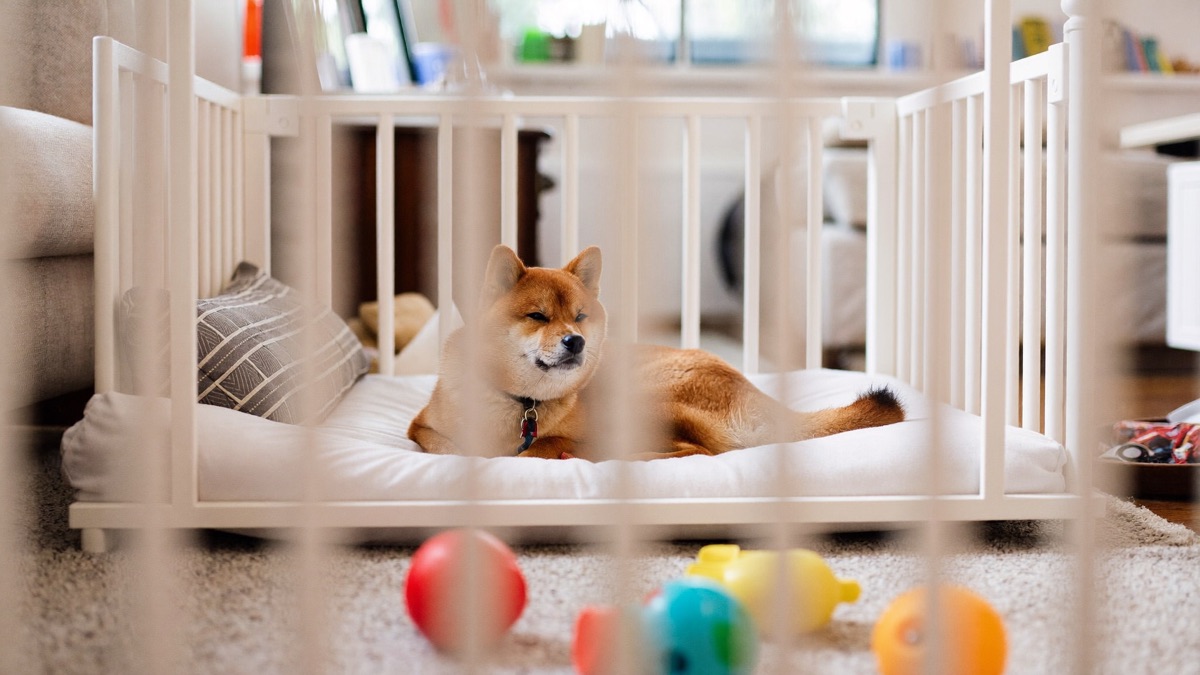
| Playpen or baby gates | 30 – 120 | 80 – 300 | Confines the puppy to one puppy-proofed zone |
| Bed (washable) | 20 – 80 | 50 – 200 | Cheap and washable beats plush — it will be chewed and peed on |
| Food + water bowls (stainless/ceramic) | 10 – 40 | 25 – 100 | Skip plastic; it scratches and harbours bacteria |
| Puppy food — same brand the breeder/shelter fed | 30 – 90/bag | 80 – 250/bag | Get 2+ weeks' worth; change nothing in week one |
| Collar + ID tag | 10 – 35 | 25 – 90 | Tag with your number on it from day one |
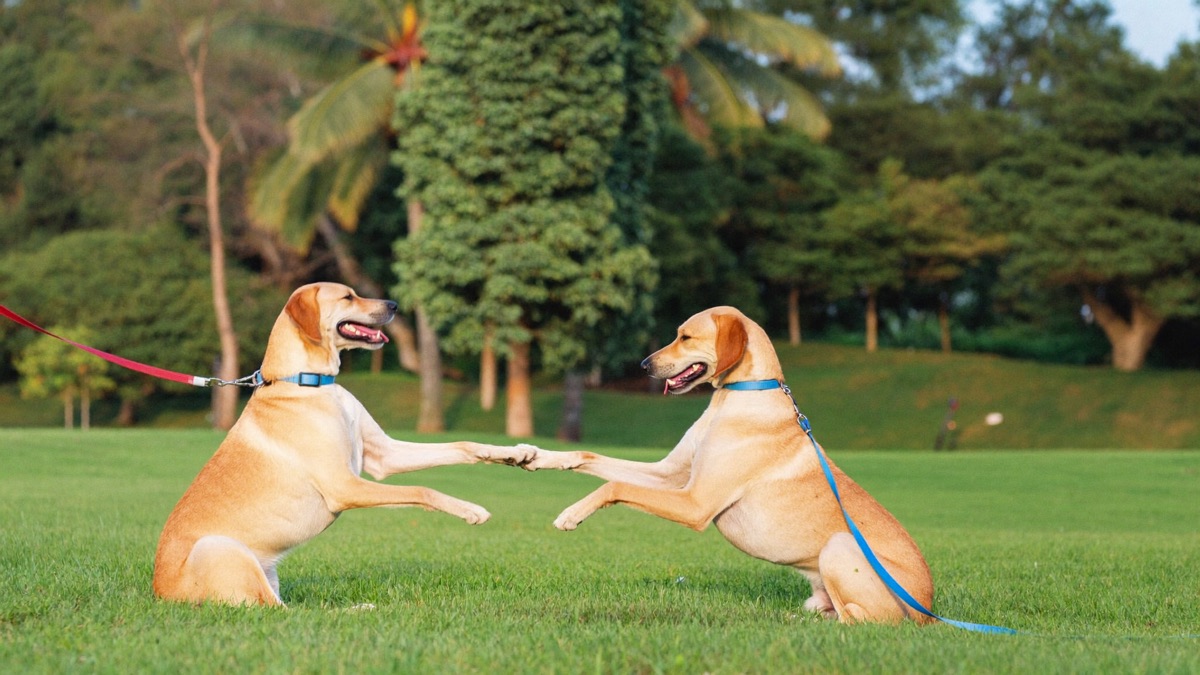
| Harness + leash | 20 – 70 | 50 – 180 | Harness for walks; puppy necks are fragile |
| Pee pads (large pack) | 15 – 35 | 30 – 90 | Bridge to proper toilet training |
| Enzymatic cleaner | 15 – 30 | 35 – 80 | Ordinary detergent doesn't erase odour markers; enzymes do |
| Grooming basics (brush, nail clipper, puppy shampoo) | 25 – 70 | 60 – 180 | Start handling paws and brushing in week one |
| Toys and safe chews (3–4 to start) | 20 – 60 | 50 – 150 | Rotate them; teething peaks around 4–6 months |
| Poop bags + holder | 5 – 15 | 15 – 40 | You'll use thousands; buy bulk |
Total: roughly S$240–S$700 / RM600–RM2,000 for a sensible starter kit. Resist the S$300 designer bed until you know what your dog actually destroys.
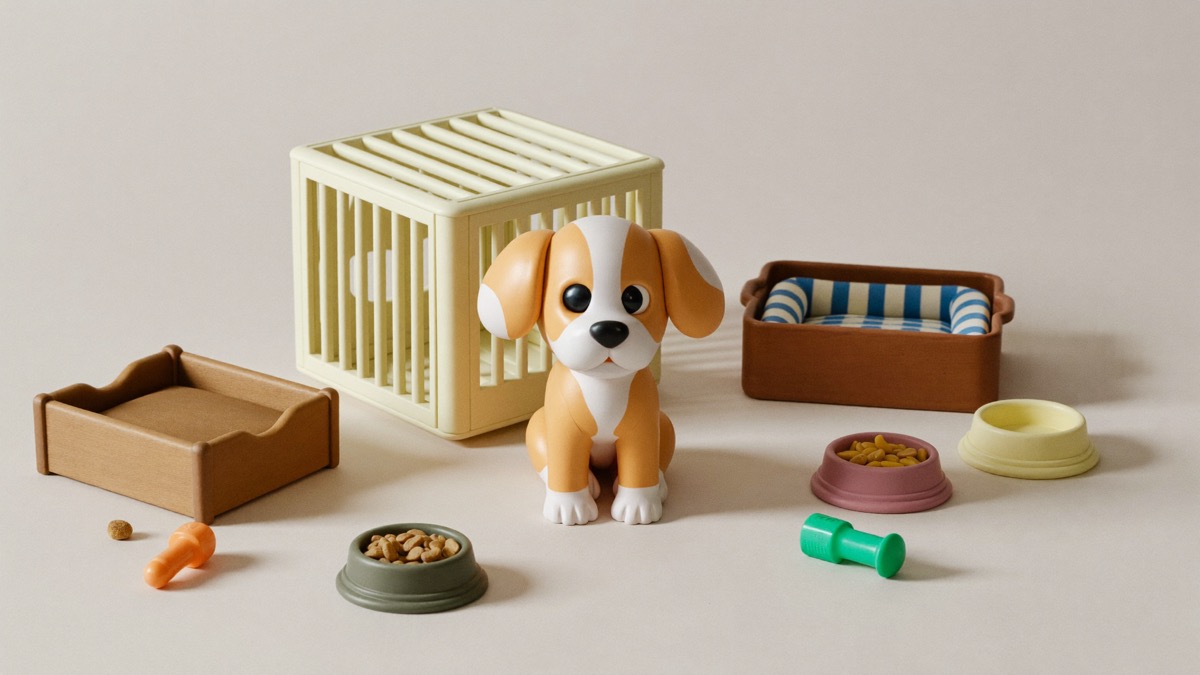
What's on the non-shopping checklist?
- Dog licence. In Singapore every dog over 3 months must be licensed via AVS's PALS system — if you bought from a licensed seller, they initiate the transfer to your name. In Malaysia, check your local council's dog licensing rules. AVS's pet ownership hub covers the Singapore requirements.
- Vet registration. Choose a clinic near home and book a check-up in the first week. Bring the vaccination card and microchip paperwork; the vet schedules the remaining doses — see the puppy vaccination schedule.
- Microchip details updated to your name and phone number, not the seller's.
- Family rules agreed before arrival: sleeping location, feeding times, who walks, which words for commands. Inconsistency in week one costs months later.
How do you puppy-proof, room by room?
- Living room: cable-tie or box electrical wires (the top chew target), move remote controls and shoes up high, secure or remove toxic houseplants — lilies, pothos, ZZ plants, snake plants and aloes are all problems.
- Kitchen: bin with a locking lid; chicken bones, onion, grapes and chocolate are the classic emergencies. In Singapore, hawker scraps on walks are the same hazard outdoors — teach "leave it" early, and never let a puppy hoover the void deck.
- Bathroom: toilet lid down, detergents and rodent bait off the floor, laundry basket out of reach (socks are a surgery-grade swallowing risk).
- Balcony/windows: mesh gaps a puppy can squeeze through; keep the balcony off-limits unsupervised.
- The puppy zone: ideally a tiled, easy-clean area with pen, crate, water and pee pad — the puppy lives here unsupervised until toilet-trained.
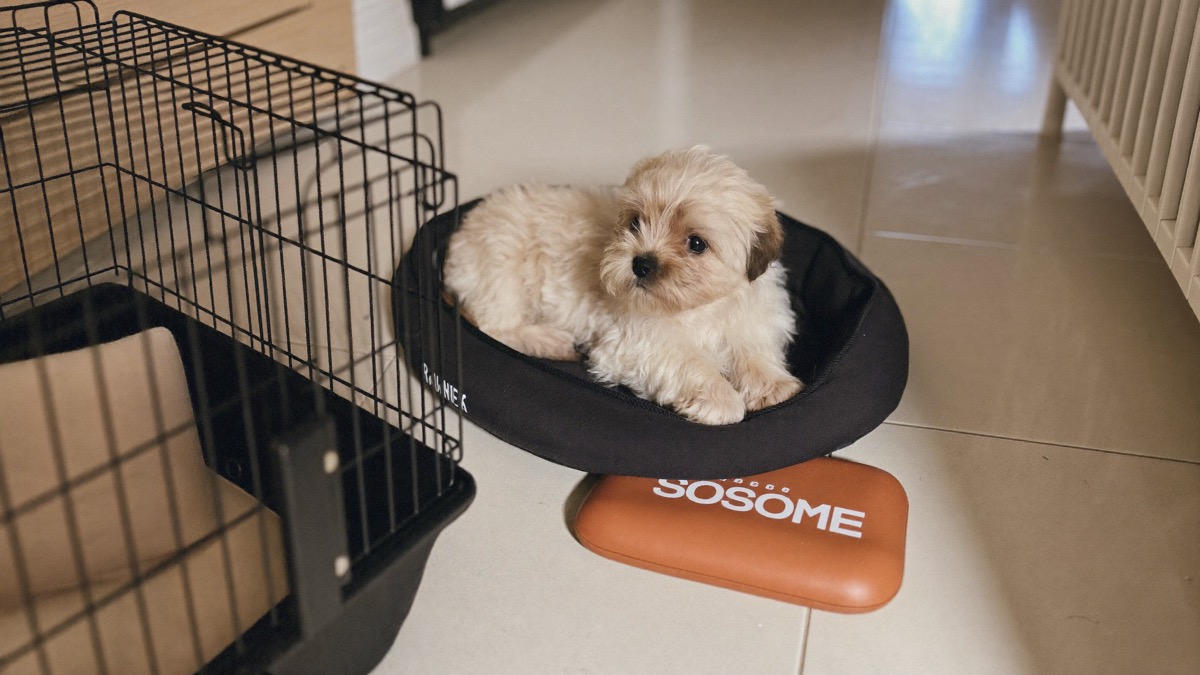
What should the first week look like?
- Day 1: quiet arrival, straight to the pee pad, then the pen. No house tour, no visitor parade. Feed the familiar food at the breeder's usual times.
- Nights 1–3: crate beside your bed helps; expect crying and read our puppy crying at night guide before you're doing it bleary-eyed at 3am.
- Day 2–3: vet visit — health check, microchip scan, vaccine plan.
- All week: toilet trips after every meal, nap and play session; short, calm handling sessions; crate fed-in and door-open so it becomes a den, not a jail.
- Hold off on parks, grass and other dogs until the vet confirms vaccination cover — parvovirus is endemic in the region and lethal to under-vaccinated puppies.
Get the gear in place, the licence sorted and the vet booked, and you can spend the first week on the only thing that actually matters: letting a slightly bewildered puppy learn that your home is safe.