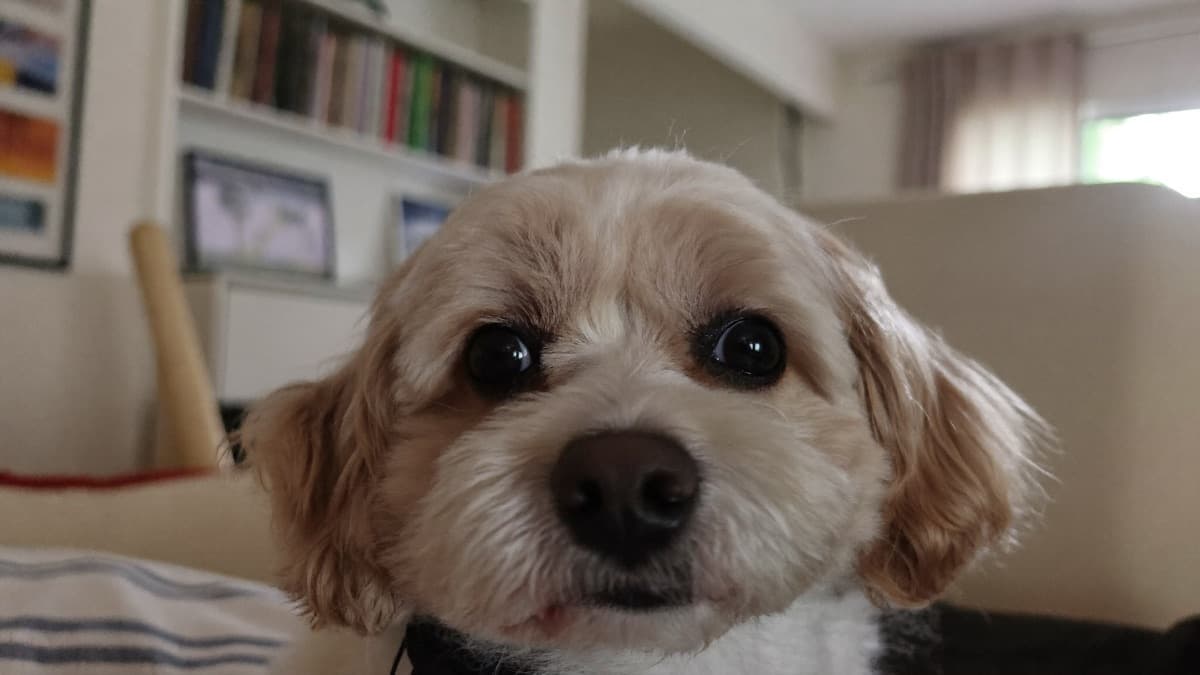
What does each colour of eye discharge mean?
| Discharge | What it usually means | What to do |
|---|---|---|
| Clear and watery | Allergies, dust, haze, wind, a blocked tear duct | Wipe, monitor; vet if it persists past a few days or the eye reddens |
| Thick green or yellow | Infection or an injured eye recruiting pus | Vet within a day |
| Brown-red crust in the corner | Normal porphyrin pigment in dried tears | Daily wipe; cosmetic only |
| Grey, stringy mucus that returns all day | Dry eye (the eye making mucus because it can't make tears) | Vet — needs a tear test and lifelong drops if confirmed |
| Any discharge plus squinting, pawing, or a closed eye | Pain — possible corneal ulcer or foreign body | Same-day vet |
Two rows deserve expansion. The brown crust row: those rust-coloured morning crumbs are porphyrins — normal iron-containing pigments in tears that oxidise and darken, the same pigments behind the stripes on white-faced dogs. If your dog's only symptom is brown residue and stained fur, that's a grooming issue, not a medical one — our tear stains guide covers the wipe routine that actually works.
And the pain row trumps every other row. Colour tells you what's in the discharge; squinting tells you the eye hurts, and a painful eye can lose its sight over a weekend. Squint plus discharge of any colour is a today problem.
Why do flat-faced breeds need extra vigilance?
Brachycephalic dogs — Pugs, Shih Tzus, French Bulldogs — carry their eyes prominently in shallow sockets, which means less lid protection, more exposure to dust and scratches, and tear films that spread poorly. The same discharge that's a shrug on a Labrador is a closer look on a Pug: their corneas ulcerate more easily, show pain less obviously, and deteriorate faster. Flat-faced owners should treat any new squint, cloudiness, or coloured discharge as a same-day call, and make a two-second eye check part of the daily routine.
What should you never put in a dog's eye?
- Human eye drops. Redness-relief drops constrict vessels and can harm dogs; antihistamine drops are unpredictable; and steroid drops, if there's an undetected ulcer on the cornea, stop it healing and can lead to a perforated eye. Since only a vet's stain test can rule out an ulcer, no leftover human or previous-prescription drop is safe to guess with — the same rule from our red eyes guide.
- Old prescriptions from a previous eye problem. Last year's drops were for last year's diagnosis.
- Contact lens solutions and "eye washes" with additives. Plain sterile saline is the only safe home flush.
- Fingers, tissues, and rubbing. Soften crusts with a soaked cotton pad; never pick dried discharge off the eyelid.
Cleaning is always allowed; medicating without a diagnosis never is.
Why do haze days make eyes worse?
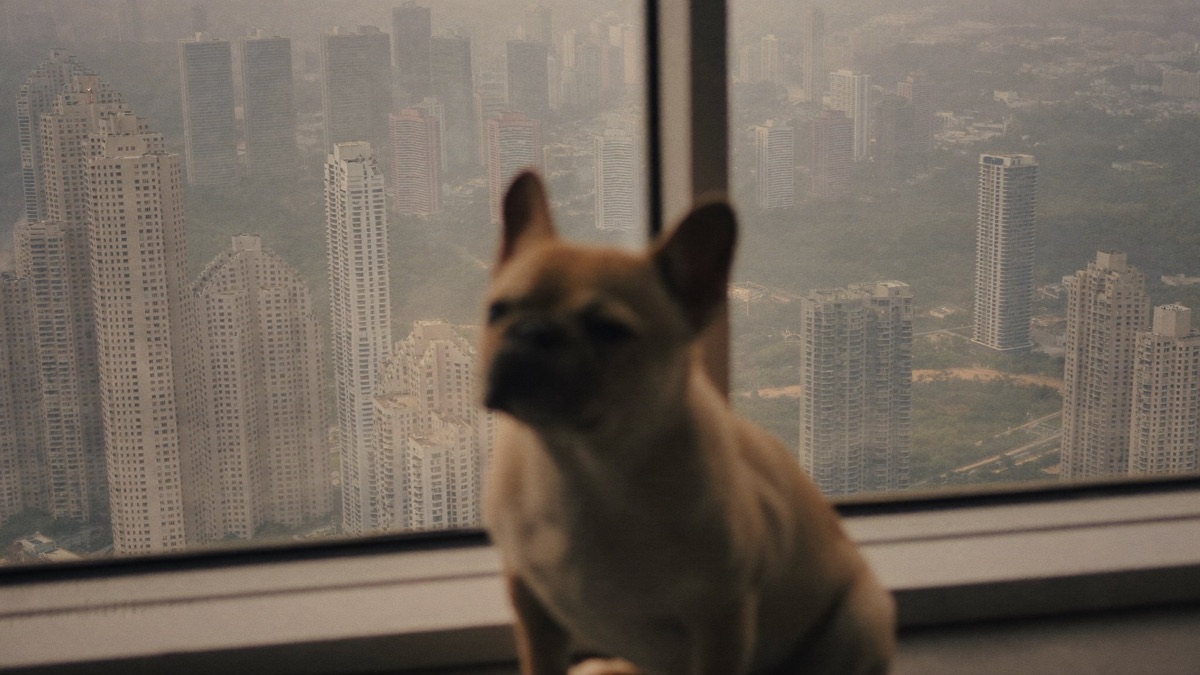
When the haze rolls into Singapore and Malaysia, dog eyes suffer the same way human eyes do: fine particles land on the tear film and irritate the surface, producing watery discharge, redness, and rubbing — with brachy breeds and dogs who already have dry eye hit hardest. On bad air days, shorten outdoor time, walk early when particle levels are lower, rinse the eyes with plain sterile saline after walks, and wipe the face. A haze flare should be watery and settle indoors; if the discharge turns thick or coloured, or a squint appears, the haze has graduated into an infection or ulcer and needs a clinic — the SVA directory lists options if your usual vet is booked out.
When does eye discharge need a vet visit?
Same day for squinting, a held-shut eye, a visibly cloudy or blue cornea, a bulging eye, or an eye injury. Within a day or so for green-yellow discharge, and within the week for clear discharge that hasn't settled, keeps recurring, or comes with steady rubbing. The eye is the one organ where "wait and see" has the worst exchange rate — ulcers that cost a tube of ointment on Monday can cost surgery, or the eye itself, by Friday.