What are the real benefits — and the honest caveats?
The case for sterilisation is strong, but it deserves to be stated honestly rather than sold.
Solid benefits:
- No accidental litters — the single biggest driver of the region's stray population, which is why groups like SPCA run subsidised sterilisation programmes.
- Health protection for females. Spaying eliminates pyometra, a life-threatening womb infection that becomes increasingly common in unspayed females as they age, and dramatically cuts mammary tumour risk if done young.
- Health protection for males. Removes testicular cancer risk and reduces prostate enlargement.
- Behaviour. Less roaming, less urine marking, less male-male aggression.
- The licence discount. In Singapore, the AVS licence for a sterilised dog is S$15 a year or S$35 one-time for life; an unsterilised dog costs S$90 every year (fees as of 2026, before the 10% online-payment rebate). Over a 12-year life, that's S$35 versus more than S$1,000. Sterilisation is also a condition of Project ADORE, the scheme that lets HDB households adopt larger Singapore Specials — details in our HDB dog rules guide.
Honest caveats: neutering is not a behaviour cure-all, metabolism drops afterwards so food needs adjusting, and in some large breeds very early neutering is associated with higher rates of joint problems and certain cancers — which is exactly why timing now depends on size.
When should a dog be neutered?
The old blanket answer was "six months". Current evidence supports waiting longer in bigger dogs, because sex hormones help close the growth plates in joints.
| Dog size | Typical guidance |
|---|---|
| Small breeds (under ~10kg) | 6–9 months |
| Medium breeds | 6–12 months |
| Large breeds (25kg+) | 12–18 months, after skeletal maturity |
| Giant breeds | 18–24 months |
For females, many vets aim to spay before the first or second heat to capture the mammary-tumour protection, balancing that against joint timing in big breeds. There is no single right answer for every dog — it's a genuine discussion to have with your vet, breed and lifestyle on the table.
What happens on surgery day?
- The night before: no food after around midnight; water is usually fine until morning.
- Morning drop-off: admission paperwork, a physical exam, and often pre-anaesthetic blood work (sometimes S$80–150 / RM100–300 extra) to confirm the liver and kidneys can process anaesthesia.
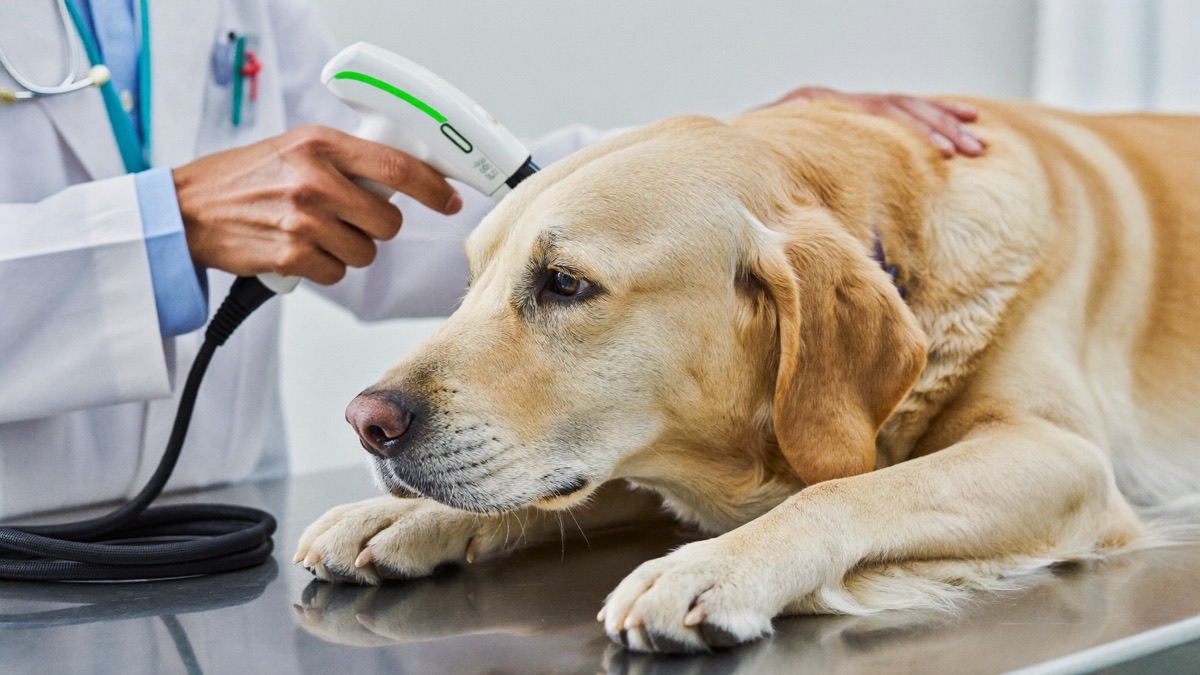
- The surgery: under full general anaesthesia. Castration takes roughly 20–40 minutes; a spay is abdominal surgery and takes 45–90 minutes.
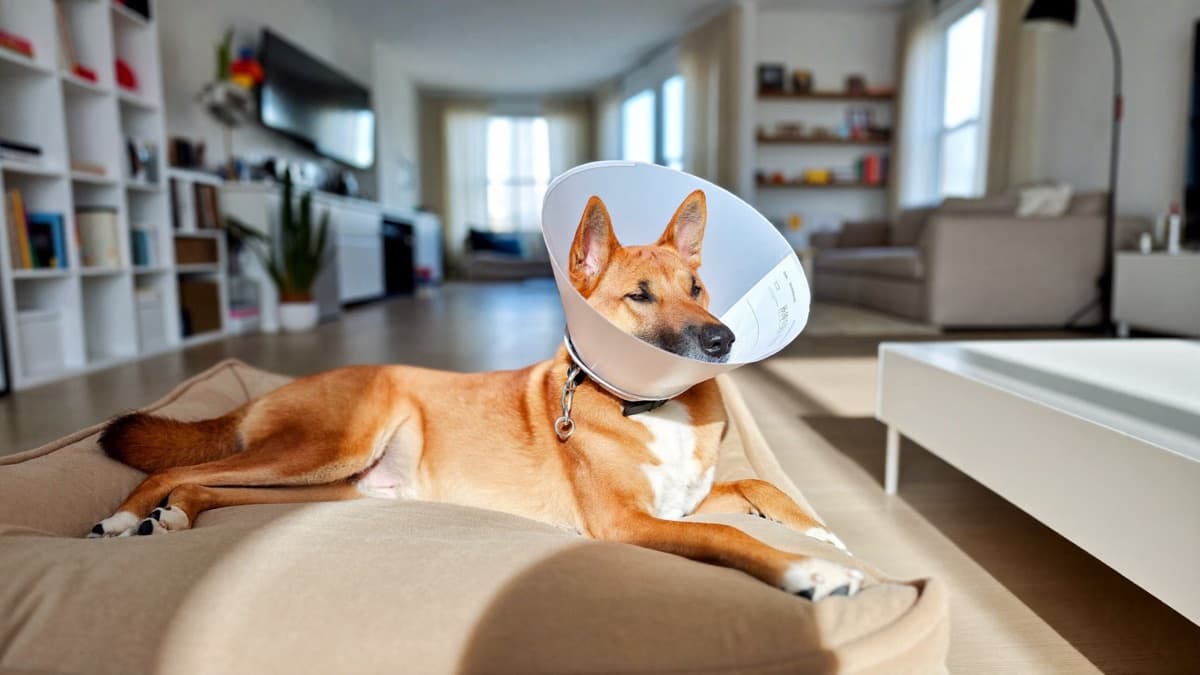
- Recovery ward: your dog wakes with pain relief already on board and is usually discharged the same evening, groggy and wearing the cone.
Most clinics call with an update the moment your dog is awake. Ask for that call — it makes the day far easier.
What does recovery look like?
Plan for a quiet 10–14 days:
- The cone stays on. One determined licking session can open the incision and turn a routine recovery into a second surgery. Soft cones and recovery suits are fine if they genuinely block access.
- Lead-only toilet walks for the first week — no running, stairs marathons, sofa launches or swimming.
- Check the incision daily. Mild bruising is normal; spreading redness, discharge, a gap, or a lethargic dog that won't eat means call the vet.
- Small dinner the first night, normal food after, at slightly reduced portions going forward.
Males are typically back to themselves within days; spayed females take closer to the full two weeks. Stitches, if not dissolvable, come out around day 10–14.
How much does it cost in 2026?
In Singapore, sterilisation generally runs S$250–800 — castration at the lower end, spays and bigger dogs higher, and laparoscopic (keyhole) spays at a premium. In Malaysia, expect RM300–1,000 at private clinics, with government veterinary clinics and SPCA programmes cheaper, and some states (Selangor, for example) offering small subsidies. The fee normally includes anaesthesia, surgery, pain medication, the cone and a follow-up check — confirm what's bundled when you book. Adopted dogs usually arrive already sterilised, one of the quiet bargains covered in our dog adoption guide.
Related guides: dog sterilisation cost in Singapore.