
Is cabbage good for dogs?
In small amounts, yes. Cabbage brings fibre, vitamins K and C, and antioxidants, all at almost no calories — one reason vets sometimes suggest crunchy vegetables as treat replacements for dogs on a diet. Green cabbage, red cabbage and napa (wombok) are all safe.
Serve it plain: shredded raw as a crunchy topper, or lightly steamed, with no oil, salt, garlic or sauce. Cut it fine — long stringy strips are harder to chew and digest. As with all extras, keep vegetables inside the 10 percent treat allowance; a complete dog food already contains everything the bowl needs.
Will cabbage give my dog gas?
Almost certainly, if you overdo it. Cabbage is a cruciferous vegetable packed with fermentable fibre, and gut bacteria turn that fibre into gas with impressive efficiency. A tablespoon of shredded cabbage is a treat; half a bowl is a decision your whole household will regret by evening.
Start with a small amount, and if your dog is already a known offender, our guide to why dogs fart covers which foods make it worse and when gas actually signals a problem. Persistent diarrhoea or a bloated, uncomfortable belly after cabbage means the portion was too big or cabbage simply does not suit that dog.
Does cabbage cause thyroid problems in dogs?
This is the myth that needs perspective. Cabbage and other cruciferous vegetables contain goitrogens — compounds that can interfere with iodine uptake by the thyroid gland. That sentence is true, and it is where most scary posts stop. The context they leave out: goitrogens only become a thyroid concern when a dog eats large amounts of raw cruciferous vegetables day after day for a long period, on top of a marginal diet. A few shreds of cabbage a couple of times a week is nowhere near that scenario, and cooking deactivates much of the goitrogen content anyway.
So the working rule: small amounts, not daily, and lightly cooked if you want the extra margin. A dog with an existing thyroid condition is the one case where it is worth asking your vet first. For everyone else, the gas will limit the portion long before the thyroid ever notices.

Which local leafy greens can dogs eat?
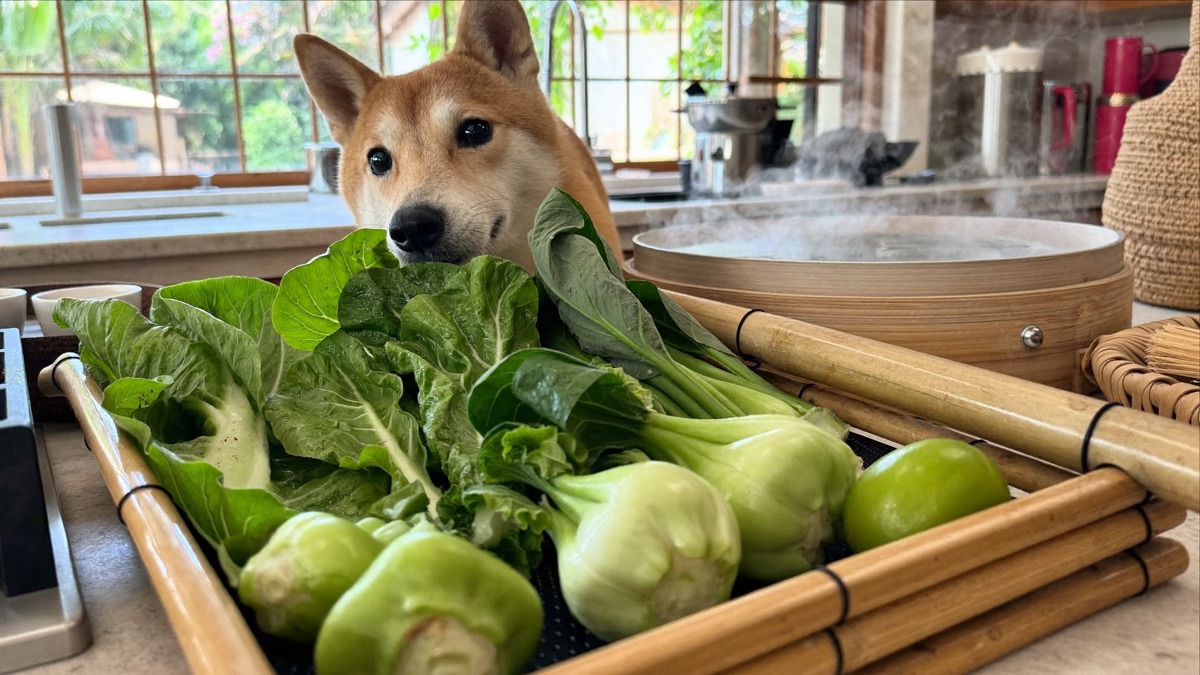
The wet-market basket, dog-by-dog:
| Green | Safe? | The rules |
|---|---|---|
| Cabbage (green, red, napa) | Yes | Small amounts, shredded, raw or lightly steamed, plain |
| Kangkong (water spinach) | Yes — cooked plain | Steam or blanch; never the sambal or garlic hawker version |
| Kailan (Chinese kale) | Yes — small amounts | Steam soft, chop small; stems are fibrous, so go easy |
| Bok choy / xiao bai cai | Yes — small amounts | Chop the crunchy base small; steamed and plain |
| Spinach (bayam) | Yes — occasionally | High in oxalates; see the note below |
| Choy sum | Yes — small amounts | Same treatment as kailan: steamed, plain, chopped |
The one that needs its own note is spinach: it is safe in small occasional amounts, but it is high in oxalates, which bind calcium and, in quantity over time, can contribute to kidney and bladder stone formation. Healthy dogs handle an occasional spoonful without issue; dogs with a history of kidney disease or bladder stones should skip spinach entirely. Kangkong, despite the "water spinach" name, is a different plant and the more forgiving everyday choice — cooked plain.
Across the whole table, the preparation rule never changes: plain, cooked simple, no garlic, no onion, no oil, no sauce. Garlic and onion are toxic to dogs in any cuisine, which rules out virtually every hawker and zi char version of these vegetables.
When should I call the vet?
Plain cabbage trouble is almost always self-limiting — gas and soft stool that settle within a day on smaller portions. Call your vet if diarrhoea or vomiting lasts more than 24 hours, if your dog ate a large amount of vegetables cooked with garlic or onion (that is a toxicity call, not a wait-and-see), or if you ever see the true emergency picture: a suddenly swollen, hard belly with unproductive retching and restlessness. That is bloat, it is unrelated to a few cabbage shreds, and it means going to a clinic immediately.