Is coconut flesh safe for dogs?
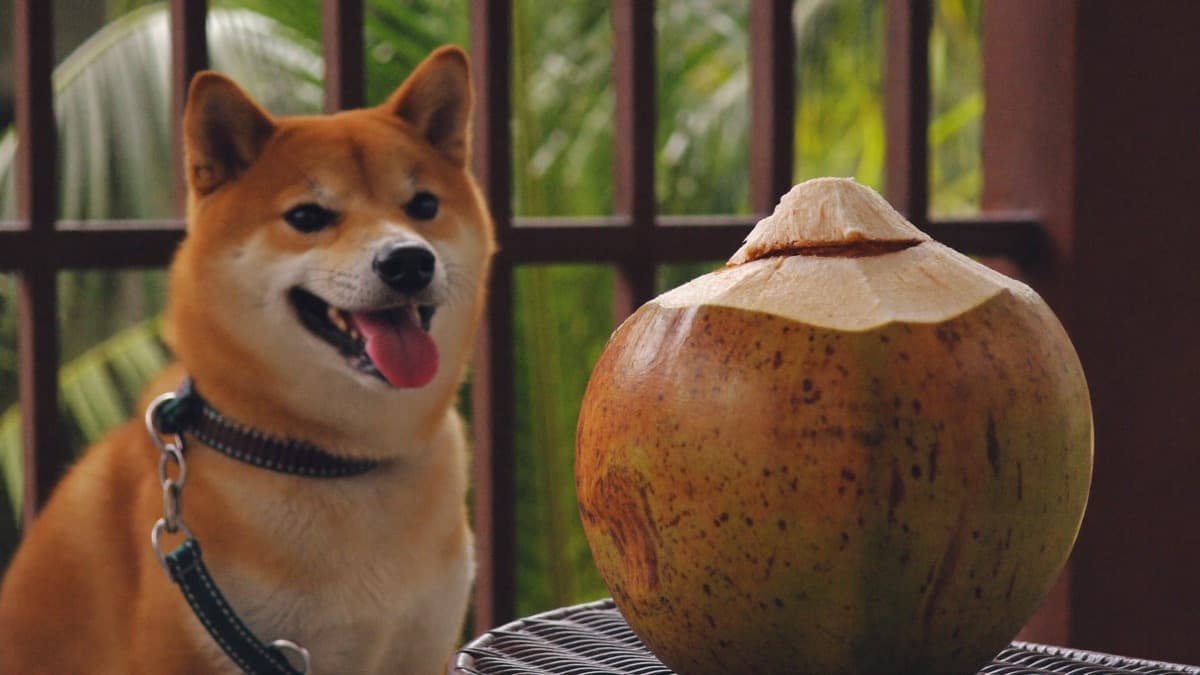
Fresh white coconut flesh is non-toxic and most dogs enjoy the rich taste. It contains medium-chain triglycerides (MCTs) — fats a dog digests readily — plus manganese and a little fibre. That same fat content is also the entire problem: coconut is calorie-dense, and regular or generous servings are a fast route to weight gain and, in susceptible dogs, an upset stomach or pancreatitis flare. Dogs with a history of pancreatitis should skip coconut altogether.
Serve small shavings or thin slivers of fresh, unsweetened flesh. Desiccated coconut from the baking aisle is often sweetened — check the label, and skip anything with added sugar.
How much coconut is safe for my dog?
| Dog size | Example breeds | Safe portion, once or twice a week |
|---|---|---|
| Small (under 10 kg) | Chihuahua, Toy Poodle, Shih Tzu | A teaspoon of fresh shavings |
| Medium (10–25 kg) | Beagle, Singapore Special, Border Collie | 1–2 teaspoons |
| Large (over 25 kg) | Labrador, Golden Retriever, GSD | Up to a tablespoon |
Note the frequency column: because of the fat load, coconut works better as an occasional treat than a daily one.
Can dogs drink coconut water?
Yes, occasionally — plain, fresh coconut water is safe and carries natural electrolytes, mainly potassium. A few laps from your fresh coconut on a hot afternoon does no harm.
What coconut water is not is a hydration plan. Plain water remains the only drink your dog needs, in far larger volumes than any treat liquid — our guide on how much water a dog should drink covers what normal intake looks like in this climate. Skip bottled coconut water with added sugar, and never offer the fermented or sweetened dessert versions.
Does coconut oil live up to the hype?
Rated honestly: the claims run far ahead of the evidence. Coconut oil is promoted for everything from shiny coats to allergy relief, but controlled evidence in dogs is limited. What we can say is that small amounts are safe for most dogs, some owners report a glossier coat, and it is a concentrated fat — about 120 calories per tablespoon — so it costs real calorie budget for an unproven return.
If your dog is scratching, coconut oil is not the fix; itching has actual causes and actual treatments, which we cover in our guide to dog itching remedies. If you still want to try coconut oil, start with a quarter teaspoon for a small dog or a teaspoon for a large one, and stop if stools turn greasy or loose.
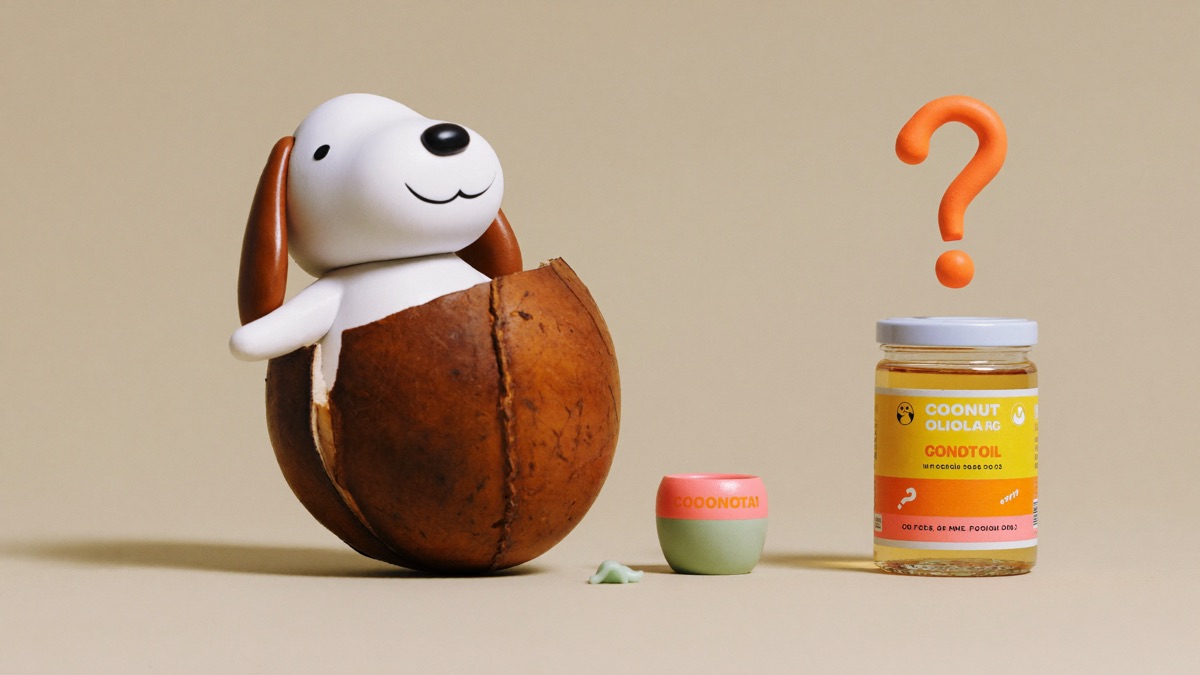
Are coconut husks and shells dangerous?
Yes — this is the part of the coconut that sends dogs to surgery. The hairy husk and the hard shell are indigestible, and swallowed fragments can lacerate the gut or cause an intestinal obstruction. The fibrous husk material also splinters into sharp shards when chewed. If you buy fresh coconuts, bin the husk and shell where your dog cannot raid them, and do not let a dog treat a whole coconut as a chew toy, however entertaining the video would be.
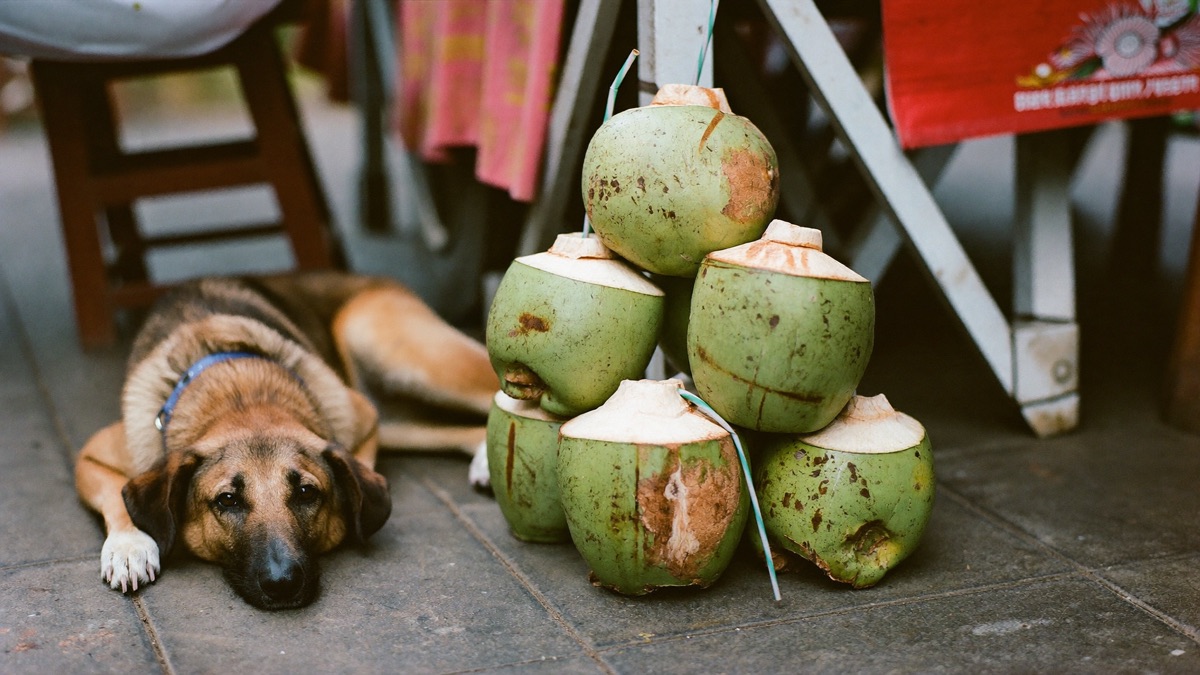
Can dogs eat kaya or coconut desserts?
No. Kaya is coconut jam made with eggs and a great deal of sugar — nothing acutely toxic, but a sugar-and-fat bomb with no place in a dog's diet, and certainly not smeared on buttered toast. The same verdict covers cendol, coconut candy, ondeh-ondeh, and curries made with santan: the coconut inside them arrives bundled with sugar, salt, or spice. If you want to share the coconut experience, share the plain flesh.
When should I call the vet?
Call your vet if:
- Your dog swallowed husk or shell fragments — vomiting, straining, a tender belly, or refusing food in the following days suggests an obstruction, which is an emergency
- Vomiting or diarrhoea after coconut lasts beyond 24 hours
- Your dog has a pancreatitis history and got into anything coconut-rich — repeated vomiting, a hunched posture, or a painful abdomen warrants an urgent visit
A single greasy stool after too much flesh usually settles on its own. For anything serious, head to your nearest 24-hour clinic — in Malaysia, the Department of Veterinary Services is the national animal-health authority for official guidance.