Which mushrooms are safe for dogs?
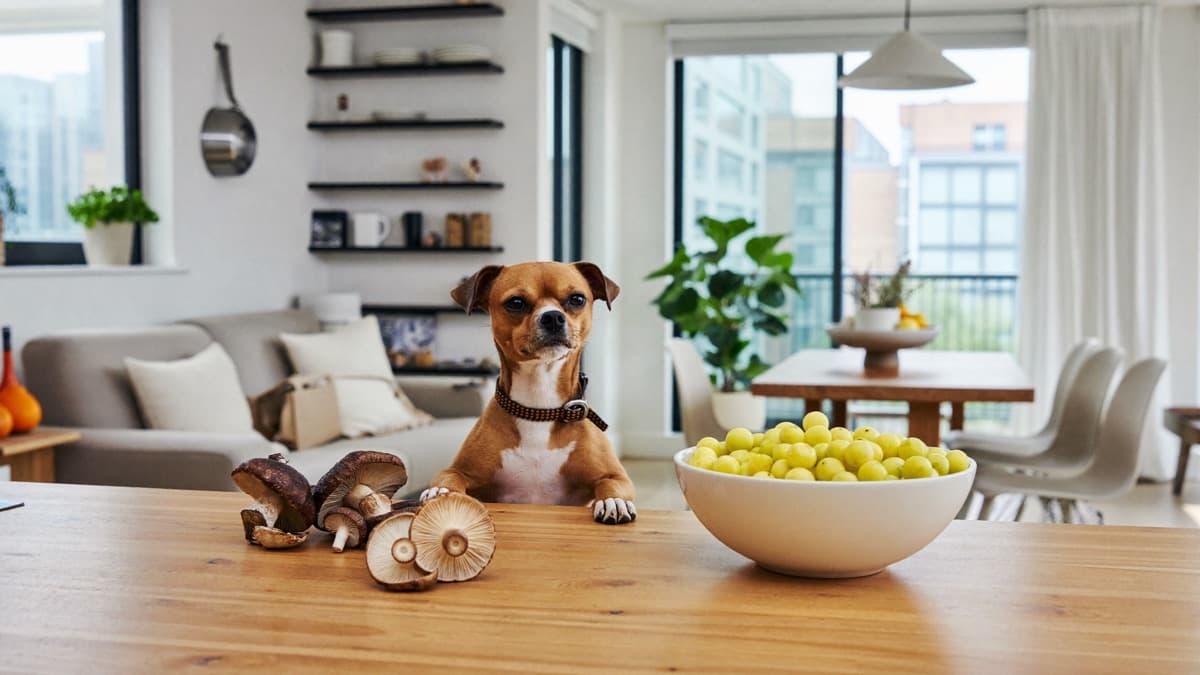
Any culinary mushroom sold for human consumption is non-toxic to dogs: white button, cremini, portobello, shiitake, enoki, oyster and king oyster all qualify. Serve them cooked and completely plain — a few small pieces steamed or dry-pan-cooked, cooled, with nothing added.
Mushrooms are not a nutritional powerhouse for dogs; they are mostly water with a little fibre and some B vitamins. Think of them as a harmless food-sharing moment rather than a health food, and keep them inside the usual rule that all treats together stay under 10 percent of daily calories. A dog that turns its nose up at mushroom is losing nothing.
Why are wild mushrooms so dangerous for dogs?
Because a handful of species contain toxins with no antidote, and identification is genuinely hard even for experts. The worst offenders — Amanita species such as the death cap — contain amatoxins that destroy liver cells. The pattern that makes them so deadly is the false recovery: vomiting and diarrhoea in the first hours, then an apparent improvement for a day or so while the toxin quietly kills the liver, then collapse. By the time the second phase shows, the damage is done. Other wild species attack the kidneys or the nervous system instead, causing tremors, seizures or a dangerous slowing of the heart, sometimes within 30 minutes.
Veterinary toxicologists therefore use one simple rule, and so should you: treat every unknown mushroom as toxic. Our roundup of foods dogs can't eat applies exactly the same rule, because there is no safe way to gamble on identification from a lawn.
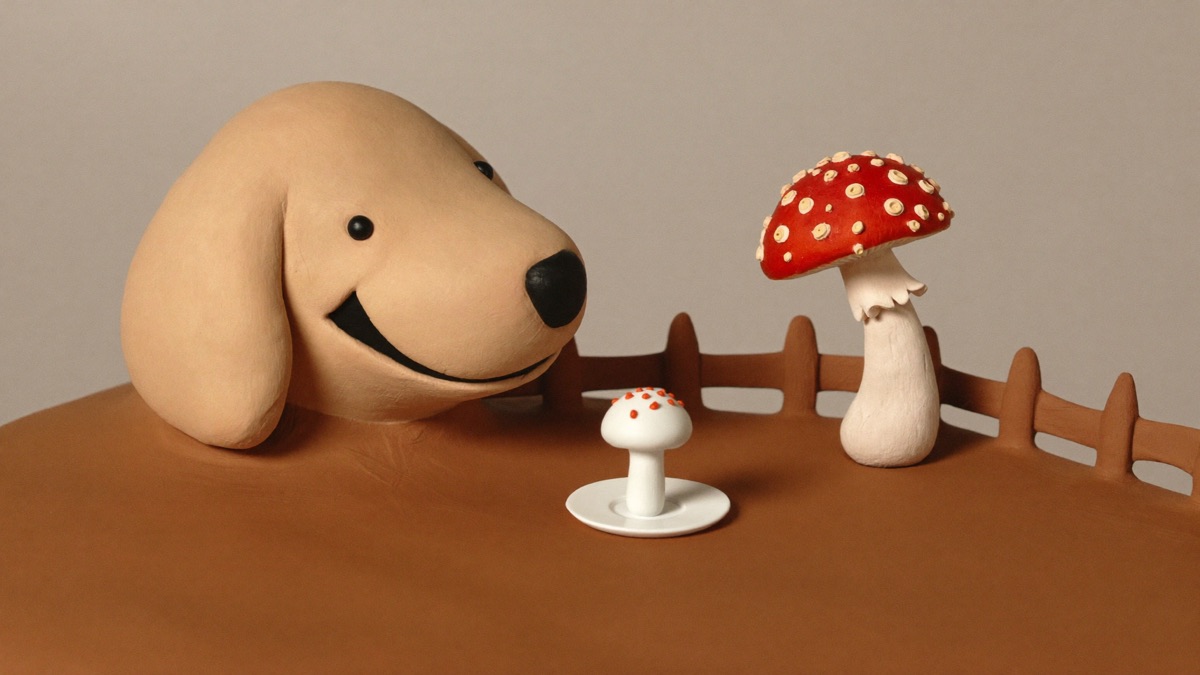
What about mushrooms growing in the grass after rain?
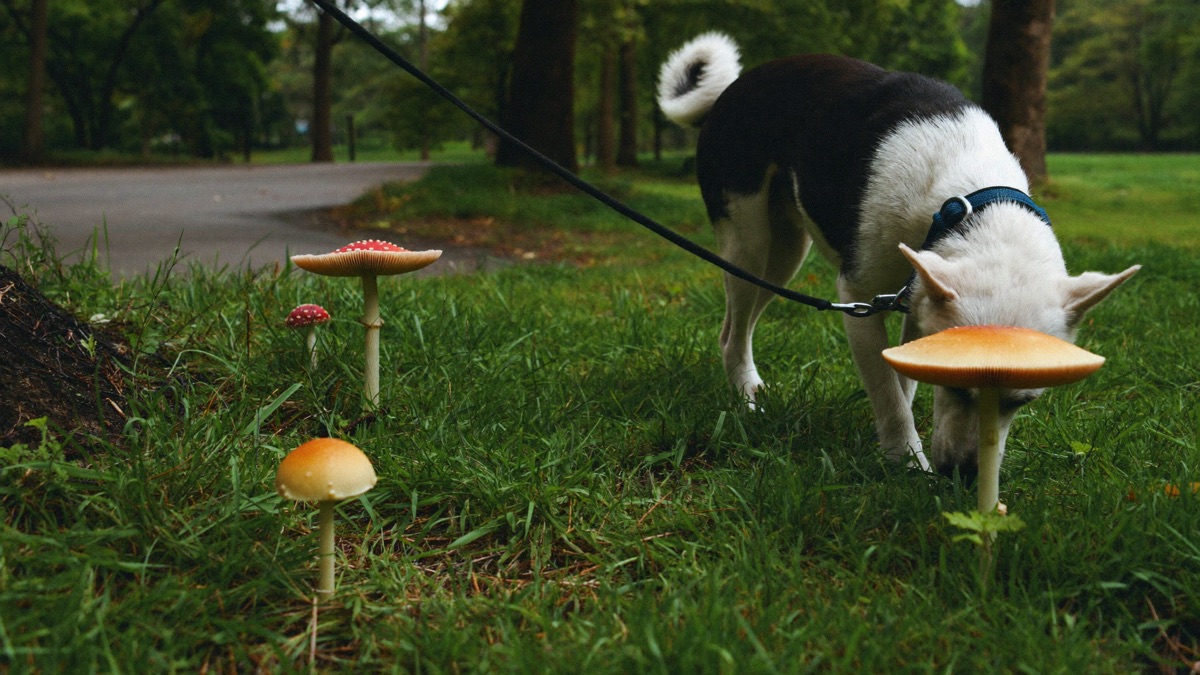
This is the version of the risk that actually matters in Singapore and Malaysia. We do not have autumn foraging season — we have year-round heat and humidity, and after a good downpour, small mushrooms sprout overnight in park lawns, grass verges, void deck planters and gardens. Most of these lawn species are harmless or mildly irritating, but some are not, and a dog snuffling through wet grass can swallow one in a second.
The habit to build is post-rain vigilance: on the first walk after heavy rain, scan the grass ahead of your dog, keep the leash short across lawns, and teach a solid "leave it". If you spot mushrooms in your own garden or corridor planters, remove them — gloved hand, into a bag, before your dog finds them. It is the same after-rain awareness we recommend for toad poisoning, which spikes in exactly the same conditions: wet ground, evening walks, a curious nose.
Can dogs eat cooked mushroom dishes?
No — not the way humans cook them. Stir-fried garlic mushrooms, buttered mushrooms, creamy mushroom pasta and mushroom soup all fail on the ingredients around the mushroom. Garlic and onion are toxic to dogs, and the butter, cream, oil and salt in restaurant-style preparations are a recipe for stomach upset — fatty leftovers are a known trigger for pancreatitis. The same goes for zi char mushroom dishes and anything from the hawker table: the sauce is the problem even when the mushroom is not.
If you want to share, set a few pieces aside before seasoning and cook them plain for the dog.
What should I do if my dog eats a wild mushroom?
Act immediately — do not wait to see if symptoms appear:
- Call your vet or the nearest 24-hour clinic straight away and say a wild mushroom was eaten. Early decontamination is the treatment that works; there is no antidote once amatoxins take hold.
- Photograph the mushroom where it grew, and take a sample in a paper bag (not plastic — it speeds up decay) for identification.
- Do not induce vomiting at home unless a vet specifically instructs you to.
- Watch for vomiting, diarrhoea, drooling, wobbliness, tremors, yellowing gums or unusual quietness — but remember that an apparent recovery after early symptoms does not mean the danger has passed.
The stakes are asymmetric: a plain shop mushroom is a shrug, a wild one can be fatal. When the source is anything other than a supermarket shelf, assume the worst and let a vet make the call.