How much should I feed my dog by weight in kg?
The table below assumes a neutered adult of moderate activity, eating a typical dry food of about 3,500 kcal/kg. Ranges span less active (lower) to more active (upper) dogs.
| Body weight | Daily calories (kcal) | Typical dry food (g/day) |
|---|---|---|
| 2 kg | 160–210 | 45–60 g |
| 5 kg | 330–420 | 95–120 g |
| 10 kg | 550–700 | 160–200 g |
| 15 kg | 750–950 | 215–270 g |
| 20 kg | 950–1,180 | 270–340 g |
| 30 kg | 1,280–1,600 | 365–460 g |
| 40 kg | 1,600–1,970 | 455–560 g |
Three rules make this table useful instead of misleading:
- Use your food's own label first. Calorie density varies hugely between products (roughly 3,200–4,300 kcal/kg for dry foods); the label's feeding guide is calibrated to that food.
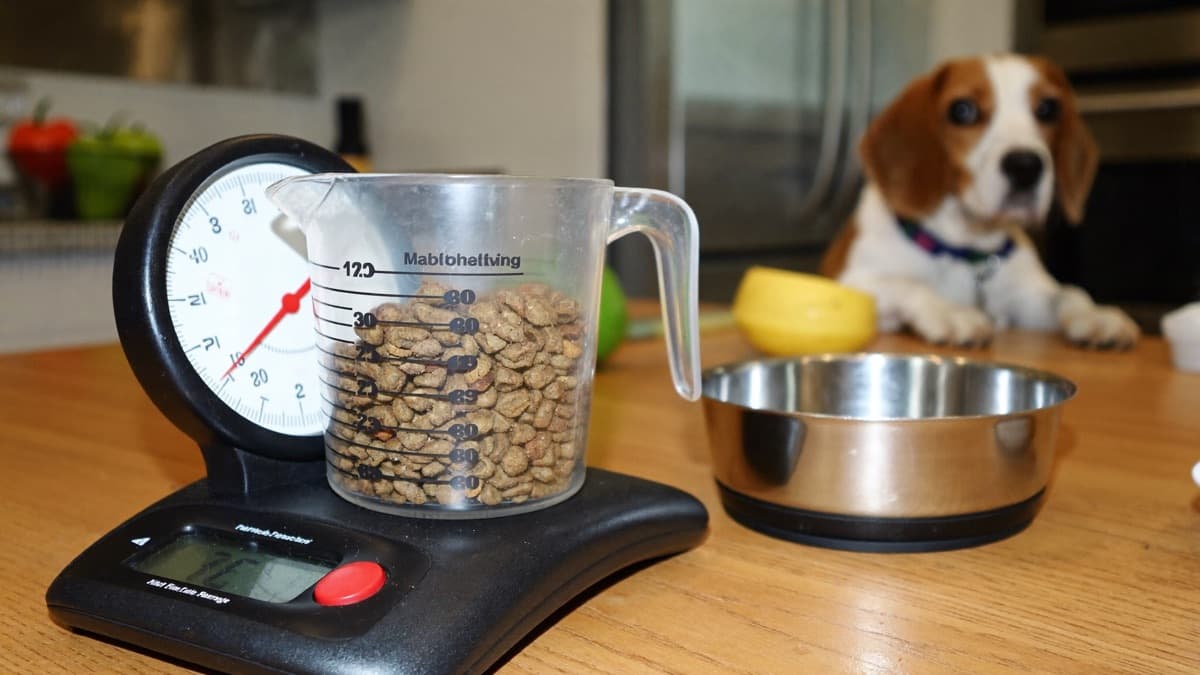
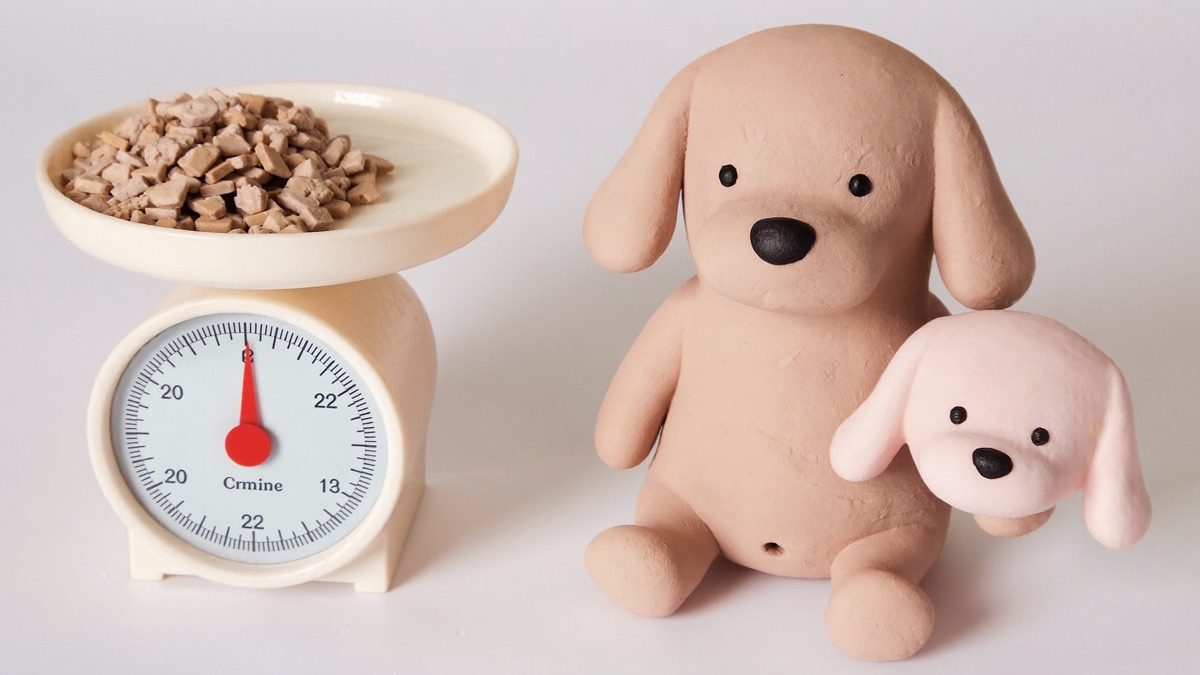
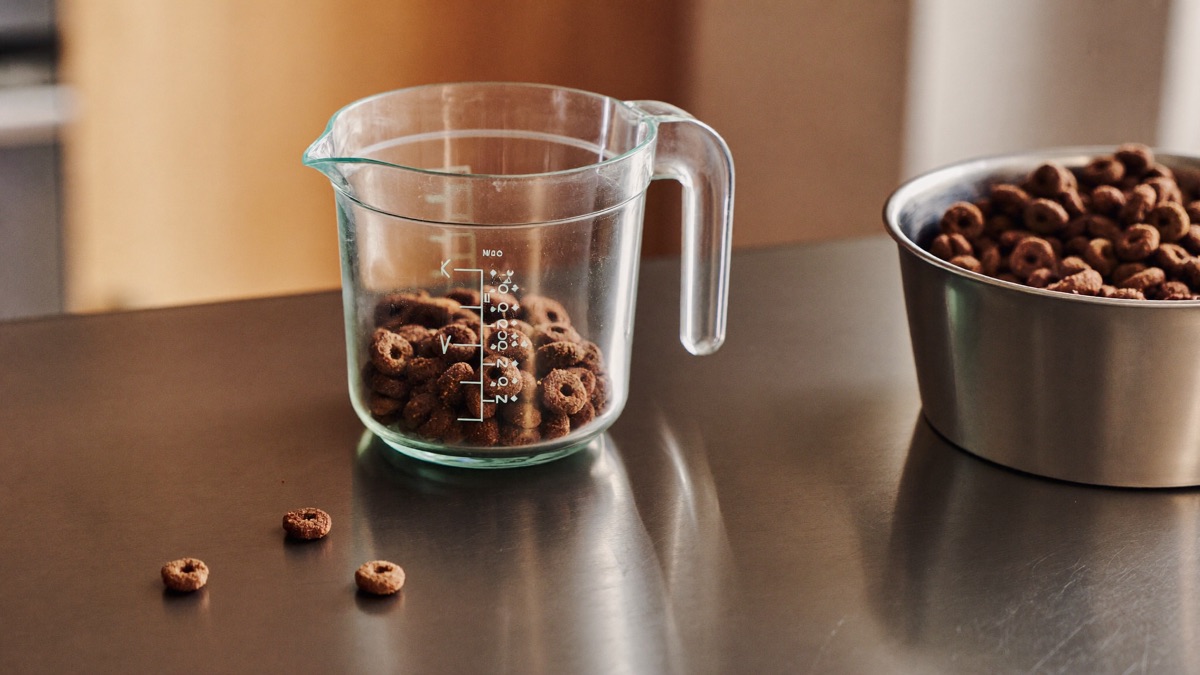
- Weigh in grams with a kitchen scale. "One cup" varies by kibble shape and scooping enthusiasm; studies show owners routinely over-scoop by 20% or more. A S$10/RM30 scale is the cheapest weight-management tool you will ever buy.
- Feed for target weight, not current weight. An overweight 30 kg dog that should weigh 25 kg gets the 25 kg ration (transition down gradually, and involve your vet for losses beyond ~10%).
Confirm with your vet — especially for weight loss plans, puppies, and dogs with medical conditions. If you don't have a regular clinic yet, the Singapore Veterinary Association maintains a clinic directory, and in Malaysia the Department of Veterinary Services is the national animal-health authority.
How much should puppies, adults, and seniors eat?
Puppies need far more energy per kg than adults — roughly double maintenance just after weaning, tapering as they grow — fed as 3–4 meals daily until about six months, then two. Feed a growth or all-life-stages diet and follow its puppy feeding table by expected adult weight. Large-breed puppies must grow slowly on large-breed growth food; a lean puppy becomes a sounder adult, and the landmark lifetime Labrador study showed lean-fed dogs lived nearly two years longer with far less arthritis.
Adults (roughly 1–7 years): the table above. Neutering drops energy needs by around 20–30% — the classic moment dogs quietly gain weight on unchanged portions.
Seniors are not automatically "feed less": many slow down and need fewer calories, but some lose muscle and need more protein and sometimes more food. Feed to body condition, and treat unexplained weight change in a senior as a vet visit, not a portion tweak.
What is body condition scoring, and why is it the real answer?
Body condition score (BCS) is how vets judge whether the amount is right — a hands-on 9-point scale (WSAVA publishes the standard chart) where 4–5/9 is ideal. The monthly home check takes thirty seconds:
- Ribs: easily felt with flat fingers under a thin fat layer — like the back of your hand, not your palm (too thin shows ribs visibly; too heavy needs pressing to find them).
- Waist: visible tuck behind the ribs when viewed from above.
- Belly: rises from chest to hindlegs viewed from the side.
Ribs hard to find? Cut the daily ration ~10% and re-check in 3–4 weeks. Prominent ribs and hips? Increase ~10%. This feedback loop beats any chart, because it measures your actual dog.
How many treats can a dog have? The 10% rule
Keep treats, dental chews, and table scraps under 10% of daily calories — beyond that they unbalance a complete diet and pile on weight. For a 10 kg dog, that is just ~55–70 kcal a day: a couple of small training treats or one modest dental chew, not both plus char siew ends. Cheap high-volume options: the dog's own kibble as training treats, or plain vegetables like carrot and cucumber.
This matters because overfeeding is the region's real feeding problem: surveys worldwide put dog overweight/obesity at 40–60%, and vets in Singapore and Malaysia see it constantly — small breeds in apartments, generous families, hot afternoons that shorten walks. Obesity strongly raises the risk of arthritis and diabetes and shortens lifespan by up to about two years. The fix is not a special food; it is grams on a scale, a monthly rib check, and a firm treat budget. For broader pet-care basics in Singapore, the Animal & Veterinary Service's owner resources are the official starting point.