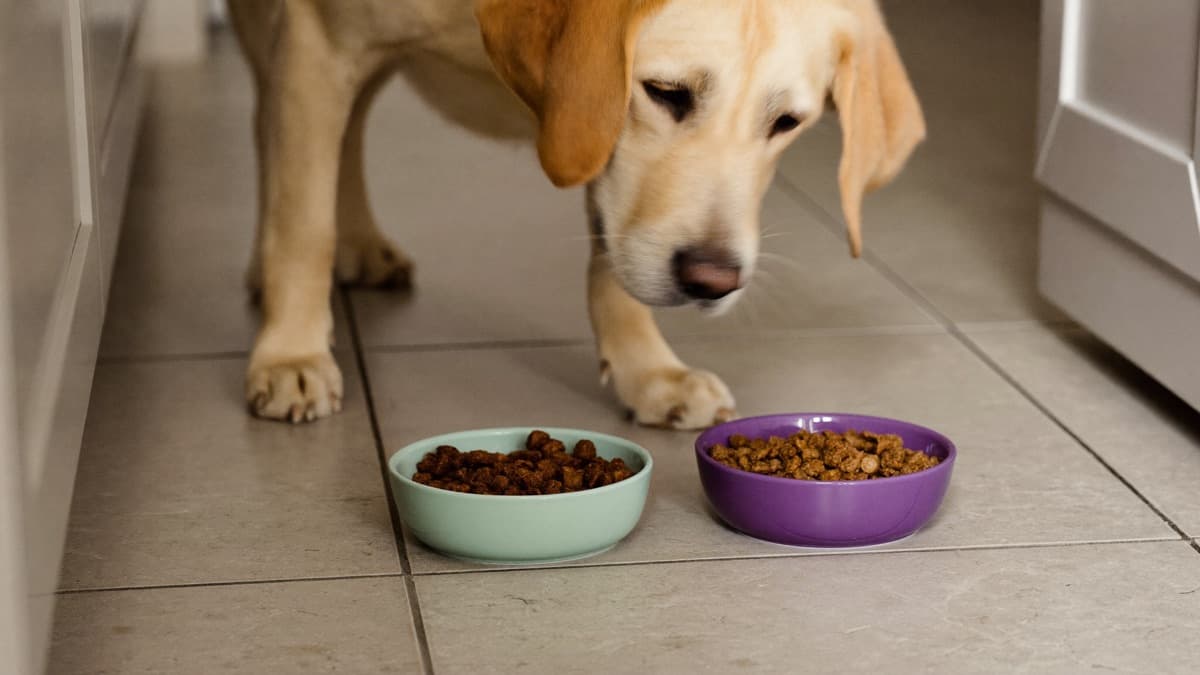
Why do sudden food switches cause stomach upset?
Your dog's gut is tuned to its current diet. The bacteria living in the intestine — the microbiome — specialise in fermenting whatever arrives daily, and the pancreas and intestinal lining produce enzymes matched to the usual mix of protein, fat, and carbohydrate. Change everything overnight and the system is briefly mismatched: some ingredients ferment badly, water is pulled into the colon, and you get soft stool, wind, or full diarrhoea within a day or two.
This is osmotic, diet-change diarrhoea — annoying rather than dangerous in a healthy adult dog, and it settles as the gut adapts. But it looks identical to the early stage of things that do matter, which is why prevention beats guessing afterwards. If your dog does develop diarrhoea during a switch and it lasts more than 48 hours, contains blood, or comes with vomiting or lethargy, follow our guide on when dog diarrhoea is a worry.
A gradual mix gives the microbiome time to shift its population and the enzymes time to adjust output. Seven days is enough for most dogs; it costs nothing and asks only a little patience.
What is the 7-day transition schedule?
| Days | Old food | New food |
|---|---|---|
| 1–2 | 75% | 25% |
| 3–4 | 50% | 50% |
| 5–6 | 25% | 75% |
| 7 onwards | 0% | 100% |
Measure by weight or by the same scoop each time, and keep total daily calories the same as before — the transition changes the ratio, not the amount. If you are also correcting portion sizes, do that after the switch is complete, using our feeding amounts guide.
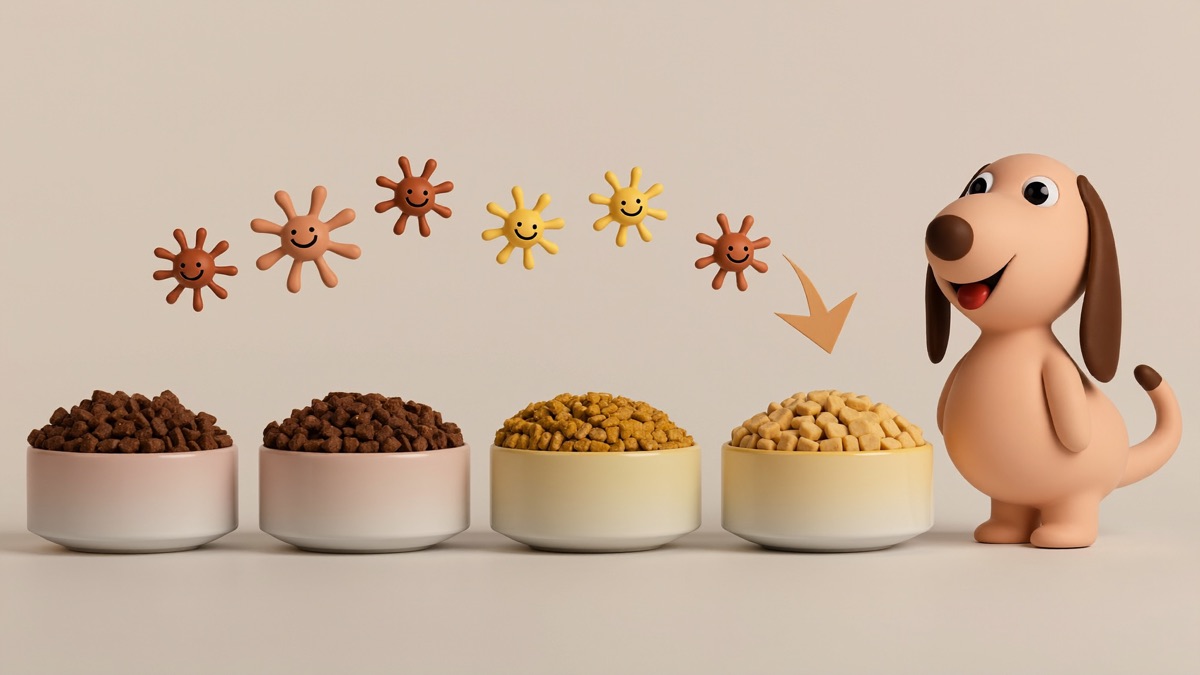
When should I slow the transition down?
Stretch the schedule to 10–14 days — simply holding each ratio for longer — if any of these apply:
- A history of sensitive digestion: any dog that has had diarrhoea from diet changes, table scraps, or new treats before.
- A big format jump: kibble to wet, kibble to fresh-cooked, or a major change in fat level. Richer, fattier diets are the classic trigger.
- Puppies and seniors: both have less digestive reserve, and puppies dehydrate faster if diarrhoea does happen.
- A protein change for suspected allergy: if you are moving to a new protein because of itching or ear infections, go slowly and change nothing else at the same time, or you won't know what helped.
If stool softens at any stage, drop back to the previous ratio for two or three days until it firms up, then continue. A pause is not a failure — it is the schedule working as an early-warning system.
When is an instant switch actually OK?
Sometimes gradual isn't an option:
- A recall or contamination of the current food — stop feeding it immediately.
- A vet-directed change: a prescription diet for kidney disease, urinary crystals, or a strict elimination trial for allergies often needs to start now, and mixing with the old food can defeat the purpose entirely.
- The old food is simply unavailable and you have run out.
In these cases, switch cleanly and manage the landing: feed smaller meals more often for the first three or four days, keep water always available, skip treats and extras, and expect somewhat soft stool as the gut catches up. Your vet may suggest a probiotic during the changeover. What you should not do is bounce between brands week to week hunting for perfection — pick well once, using our guide on how to choose dog food, and let your dog's gut settle.
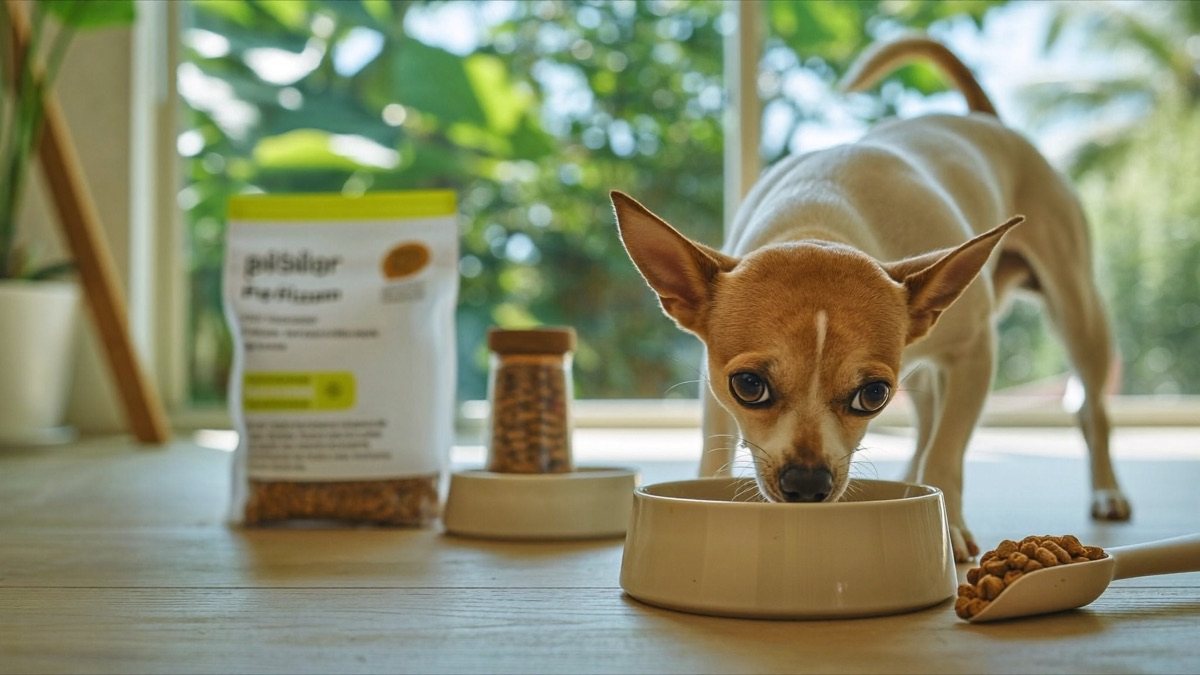
How do I know the switch is working?
Stool is your dashboard. You are looking for motions that stay formed and pick-up-able — vets score stool from 1 (hard pellets) to 7 (liquid), and a 2–3 is the sweet spot. Alongside stool, watch:
- Appetite: keen eating at each new ratio is a green light. Sniffing and walking away for more than a meal or two may mean the new food, or the pace, isn't right.
- Gas and gurgling: a little extra wind mid-transition is normal; clearing the room for days is a reason to slow down.
- Skin and coat: any benefit from a diet change here takes 4–8 weeks to show, so judge nothing in week one.
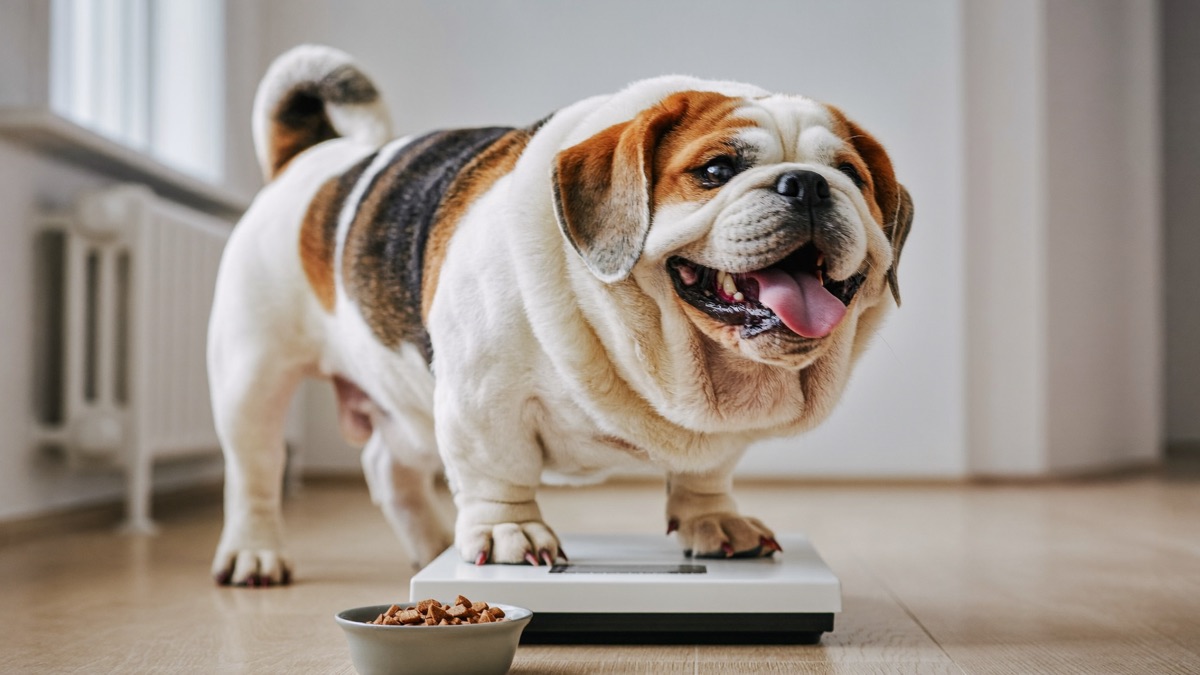
- Weight: new foods often differ in calories per cup. Weigh your dog two weeks after the switch and adjust portions.
Give a new diet 6–8 weeks at full ration before judging it. In Singapore and Malaysia's humidity, one more practical point: buy the new food in a small bag first. If the switch fails, you haven't invested in 12 kg of kibble that will go rancid long before your next attempt.