Why is my dog chewing the furniture?
Match the fix to the cause, because the three big drivers need different answers.
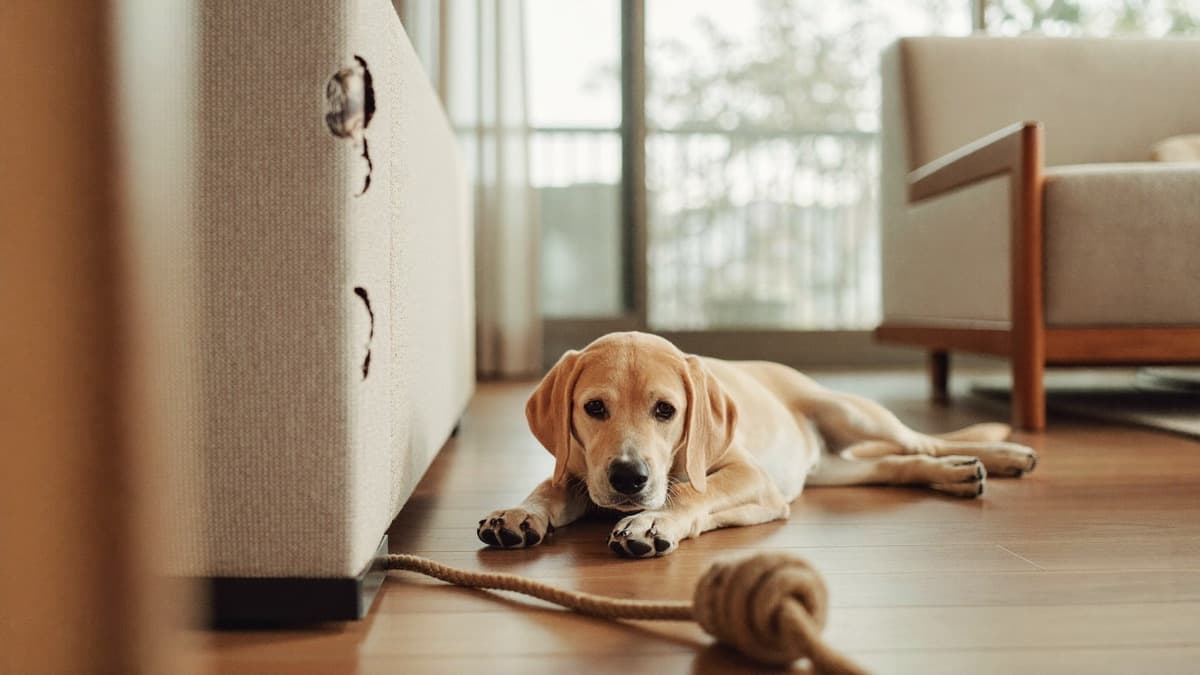
Teething (roughly 3-7 months). Puppies losing baby teeth chew to relieve sore gums, and cool or soft-but-resistant textures feel best — which unfortunately describes sofa corners and rattan chair legs perfectly. This phase is time-limited; our puppy teething guide covers what's normal and what needs a vet.
Boredom and under-stimulation. The most common cause in adult dogs, especially in apartment living where a dog may spend 8-10 hours alone. Chewing releases feel-good chemicals and fills empty hours. A dog with no walk, no sniffing time and no chew outlet will manufacture its own entertainment out of your dining chairs.
Anxiety. Chewing is self-soothing, so stressed dogs chew more — during thunderstorms, after a house move, or when left alone. Anxiety-driven chewing has a different signature, covered below, and needs a different plan than more toys.
Adolescents (7 months to 2 years) also go through a second, stronger chewing phase as adult teeth set in the jaw — many owners are blindsided because they thought teething was over.
How do I chew-proof the flat?
Management comes before training because every chew on the sofa is a rep of practice that pays. For the weeks the habit is being rebuilt, your dog should not have unsupervised access to furniture it targets.
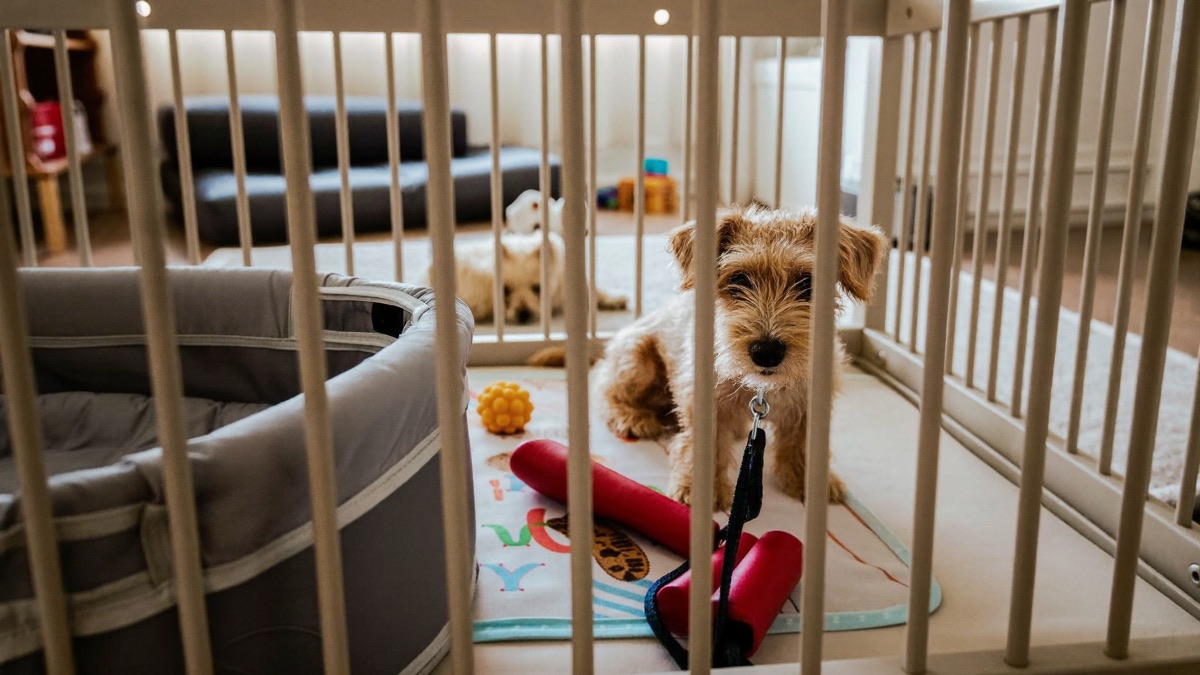
- Shrink the zone. Use a playpen, baby gate or a closed door to keep the dog in a chew-safe area when unsupervised — bed, water, and legal chews only.
- Remove or block favourites. Move the rattan chair, box in the exposed table legs, tuck charging cables away. A month of ugly is cheaper than a new sofa.
- Meet needs first. A sniffy walk and a training game before you leave drains the energy that would otherwise go into the coffee table. See how often should I walk my dog for realistic targets.
Then stock legal chews that beat furniture on texture:
| Legal chew | Best for | Watch out for |
|---|---|---|
| Rubber stuffable (Kong-type), S$15-35 as of 2026 | Long-lasting, freeze with food inside | Buy the right size; replace when cracked |
| Rope toys | Dogs who like fabric/shredding textures | Discard once strands fray loose |
| Edible dental chews | Daily short sessions | Calories count; size to the dog |
| Frozen wet washcloth | Teething puppies | Supervise; take away once thawed |
| Food puzzles / lick mats | Boredom chewers | Rotate weekly to keep novelty |
Rotate three or four chews and put the rest away — novelty is half the appeal, and a floor permanently littered with ignored toys teaches your dog that the only interesting texture left is the sofa.
What's the redirect protocol when I catch my dog chewing?
Catching your dog mid-chew is a training moment, not a discipline moment. The sequence: interrupt gently (a soft "ah-ah" or just your dog's name — no yelling, no chasing), lure the dog off the furniture, hand over a legal chew, then praise warmly the moment teeth touch the right item. Done consistently, the dog learns "chewing is fine, chew this" — which is the actual lesson, because you cannot train a dog out of chewing altogether.
What doesn't work: scolding after the fact (the dog links your anger to your arrival, not the chewing), rubbing the dog's nose in damage, or smacking. The American Veterinary Society of Animal Behavior is unambiguous that aversive methods add fear and damage trust without teaching the alternative — and a punished chewer usually just becomes a secret chewer.
Do bitter sprays actually work?
Honestly rated: sometimes, as a supporting act. Bitter apple-type sprays (S$10-25 / RM30-70 as of 2026) work on maybe half of dogs — some genuinely hate the taste, some ignore it, and a few appear to treat it as seasoning. They also wear off within a day or two and need constant reapplication. Used alongside management and legal chews, a spray can protect one high-value item like a sofa corner or skirting board; used alone, it fails, because it makes one target unpleasant without giving the dog anywhere legal to put a normal behaviour.
When is chewing actually separation distress?
Look at where and when. Boredom chewing is scattered — a cushion here, a shoe there — and the dog is calm on video, chewing between naps. Distress chewing clusters at exit points: door frames, the front gate, window grilles, and it starts within minutes of you leaving, alongside pacing, drooling and vocalising. Damaged doors plus a dog that greets you frantically and won't eat while alone points to separation anxiety, which is a panic disorder, not a training problem — more chews won't fix it, and punishment will make it worse. Film one absence; ten minutes of footage will save you months of guessing.
For everything else: manage the space, stock better chews, redirect calmly, and let the habit — and the teething clock — run its course.