Why do dogs develop harness and leash fear?
Watch a standard harnessing from the dog's point of view: a human looms overhead, grabs the head, and pulls fabric across the eyes and ears — briefly blinding the dog while restraining it. Most dogs tolerate this; sensitive dogs learn to dodge, hide or freeze. Add a few chases around the sofa to "get it on", and the harness now predicts being cornered.
Leashes carry their own baggage. For an ex-street dog, the first leash of its life may have been the pole of a catch, a tether it fought against, or simply a totally alien pressure on the neck. And for many dogs the leash means the end of something — clipped on at the dog run exit, at the end of every sniff. Equipment fear is nearly always a story about what the equipment has predicted.
What is the disappearing-head problem?
Over-the-head harnesses require the dog to push its face through a closed loop — the exact motion fearful dogs hate most, because it blocks vision and traps the head. The workaround is hardware, not persuasion:
| Design | Goes over the face? | Best for |
|---|---|---|
| Over-the-head Y-harness | Yes | Confident dogs, or later in rehab |
| Step-in harness | No — dog steps in, clips on the back | Head-shy and fearful dogs |
| Side/double-buckle Y-harness | No — lies flat, buckles around | Fearful dogs; escape-resistant versions suit flight risks |
Basic step-in and double-buckle harnesses run roughly S$15–60 / RM25–90 as of 2026, with escape-resistant three-strap designs above that. For a fearful rescue, escape-resistance matters more than price — a panicking dog can reverse out of a loose two-strap harness in seconds, which is why newly adopted flight risks should be double-leashed to harness and collar together.

How does dress-for-dinner pairing work?
Make the harness the best predictor in the dog's life: harness on = meals happen.
- For the first few days, just lay the harness flat on the floor near the bowl at mealtimes. It does nothing; food happens near it.
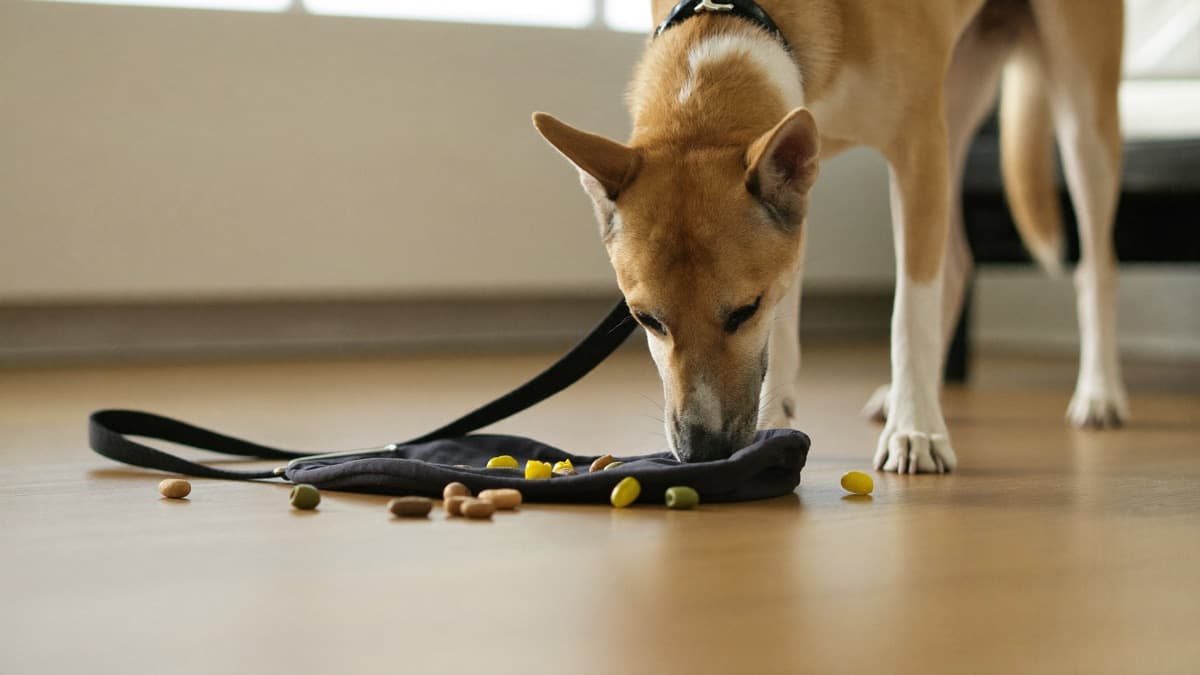
- Next, hold the harness low and still. The dog eats treats scattered around and on it. Any voluntary sniff or step towards it earns extra.
- Lay it open on the floor and drop a treat in each loop, so the dog stands into it to eat. You haven't touched the dog yet.
- Fasten one buckle for one second while the dog eats from a lick mat, then release. Build to both buckles, then to wearing it through the whole meal.
- Wear it for meals and pleasant indoor time for a week before it ever means "we're going out".
The rule at every step: the dog moves towards the harness, never the harness towards the dog. If the dog backs off, you've skipped ahead — drop back a step. The same gradual-pairing principle drives our desensitisation and counterconditioning guide, and it applies unchanged to the leash: leash appears, treats rain; leash clips on indoors, dinner is served; nothing else happens.
Why train collar grabs as a safety skill?
One day someone will grab your dog's collar — at an open gate, at the vet, mid-scuffle. For an untrained fearful dog, that grab can trigger a spin, a slip loose or a bite. Collar-grab desensitisation inoculates against the emergency: touch the collar lightly, feed, release. Then hook one finger under, feed, release. Then a gentle hold, feed; a hold with slight pressure, feed generously. Thirty seconds a day, always ending with the treat and the release, until a hand on the collar makes the dog turn towards you expecting cheese. It's the cheapest life insurance in dog training.
What about ex-street dogs and first-leash panic?
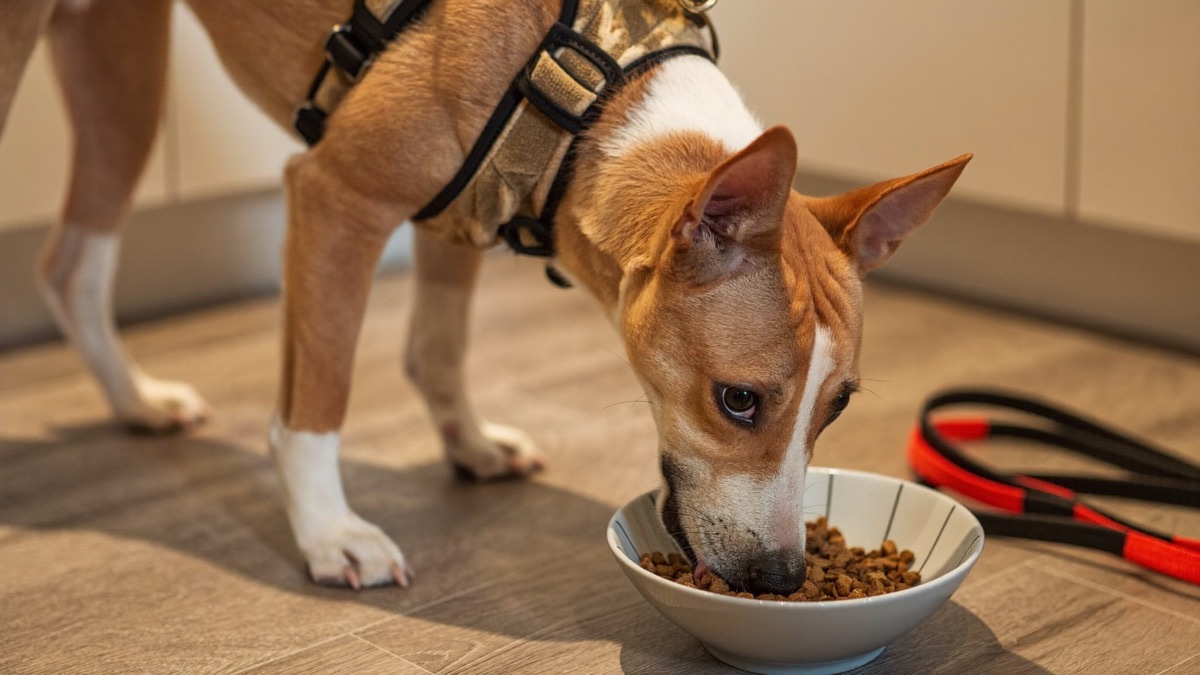
Many Singapore Specials have never worn anything at all, and the first leash pressure can trigger genuine panic — alligator-rolling, screaming, throwing themselves against the line. Never stand and hold firm through it; that's how dogs slip gear and bolt, and how leash fear gets cemented. Instead: fit lightweight gear indoors first and let the dog drag a short light line around the flat (supervised) for days, so pressure appears and disappears with the dog in control. Add your hand on the line indoors before any corridor, lift or void deck is attempted. If panic persists beyond a couple of weeks, an AVS-accredited force-free trainer is money well spent.