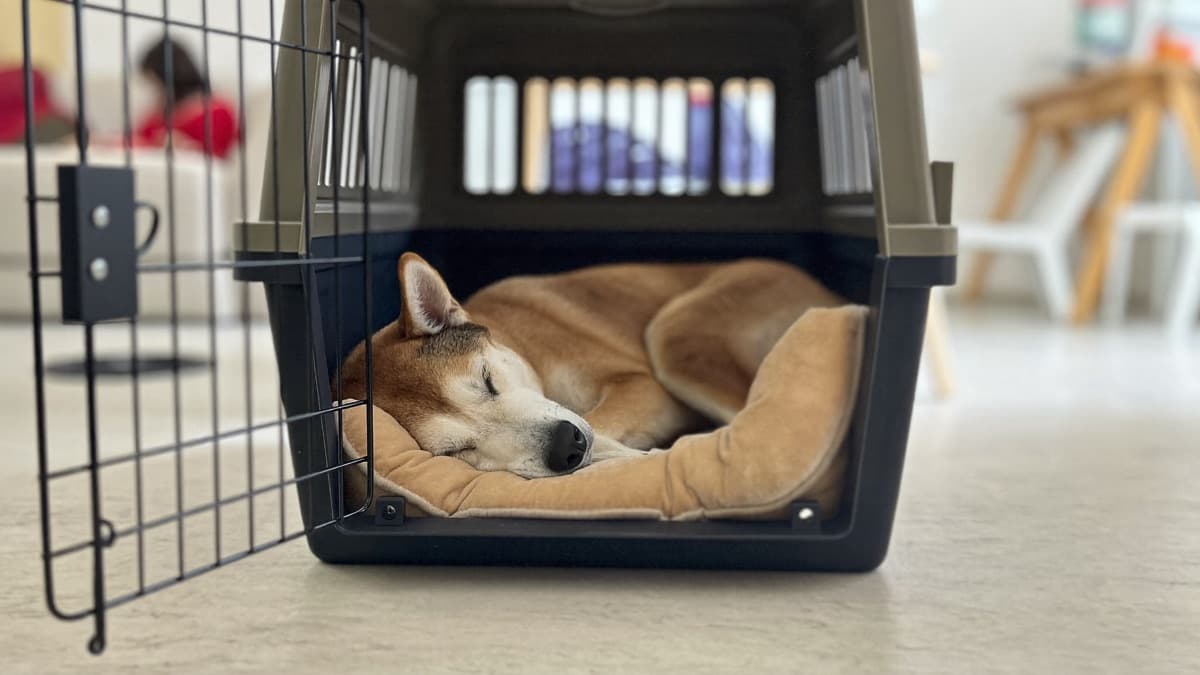
Why did the den become a prison?
The "dogs are den animals" line gets stretched to justify a lot. A den is somewhere an animal chooses to enter and can always leave; a crate with a latched door is neither, unless the dog has been carefully taught to feel safe in it. Common histories behind crate fear:
- Shipping and transport. Imported dogs and some rescues spent frightening hours crated in cargo holds or transport vans. The crate was where the worst day of their life happened.
- Punishment use. Dogs sent to the crate in anger learn it's a jail cell that predicts the owner's bad mood.
- Over-crating. A dog crated most of the day, every day, has learned crates mean isolation and a bursting bladder.
- Panic and confinement anxiety. Some dogs — especially those with separation anxiety — panic in any enclosure. Drooling, bar-chewing, bent doors and bloodied paws are emergency-level signs, not naughtiness.
Whatever the history, the rule going forward is absolute: never force. No pushing in, no luring in and shutting the door, no ignoring screaming "so it learns". Every forced repetition adds a layer to the fear you're trying to remove.
How does open-crate rehab work?
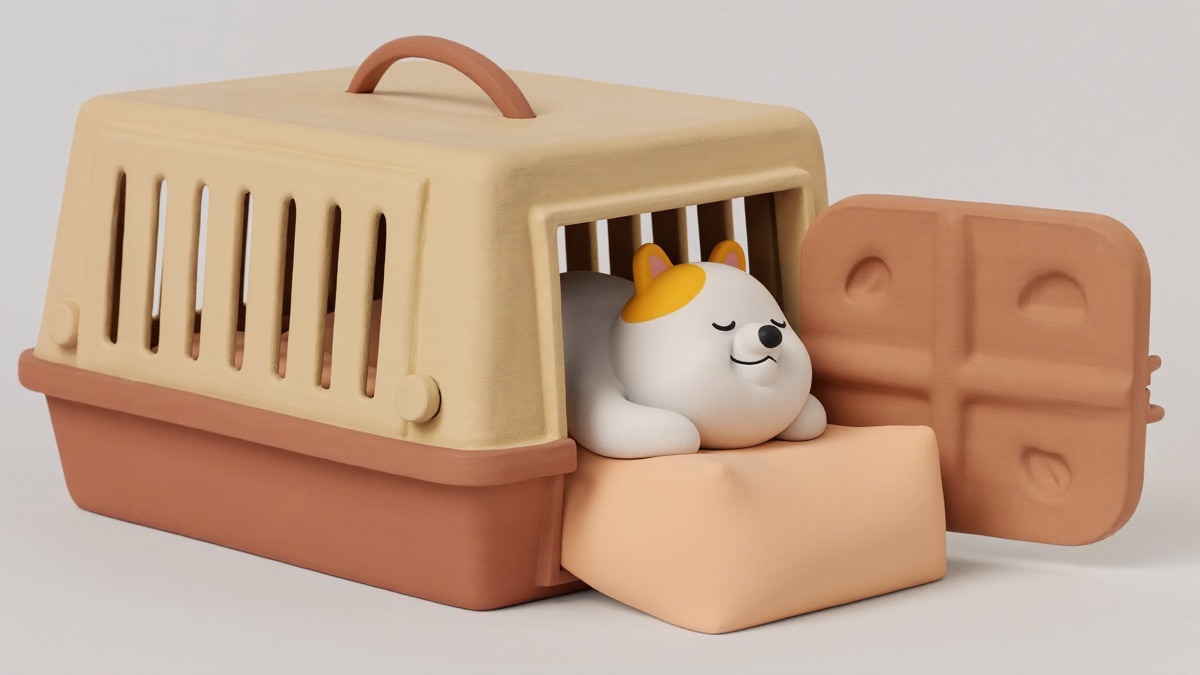
The door comes off — literally, if it's removable, or zip-tied fully open. For weeks, the crate is just furniture that produces food:
- Weeks 1–2: feed nearby. Crate sits in the living area with the best bed in the house inside. Meals happen a comfortable distance away, drifting closer over days. Treats get discovered around and just inside the entrance — dropped when the dog isn't watching, so the crate itself seems to generate them.
- Weeks 2–4: feed inside, dog optional. Bowl goes just inside the entrance, then halfway, then at the back — but only as fast as the dog stays loose and waggy. Dog eats and leaves freely. Any hesitation, move the bowl back out.
- Weeks 4+: chosen naps. When the dog starts hanging out or napping in the crate on its own, you've built a den. Only now does the door go back on — closed for one second while the dog works a lick mat, opened before the dog cares, and built up in seconds, then minutes, over further weeks.
The calendar above is a floor, not a ceiling — badly frightened dogs may need double. The step-by-step door-closing progression is the same as in our crate training a puppy guide; the difference for a scarred dog is how long you stay in the open-door phase. Weeks. Genuinely.
What are the honest alternatives to a crate?
A crate is a tool, not a requirement, and for some dogs the kindest decision is to stop needing one:
| Alternative | Good for | Watch out for |
|---|---|---|
| Exercise pen (~S$40–150 / RM60–250 as of 2026) | Puppy-style management with room to move; folds flat in an HDB flat | Athletic dogs can jump or shift light pens |
| Dog-proofed room + baby gate | Most adult dogs home alone | Genuine proofing: cables, bins, balcony access |
| Whole-home freedom | Settled adults past the chewing stage | Build up with short absences first |
A dog that sleeps calmly in a pen or gated kitchen has exactly the same quality of life as a crate-trained dog. Toilet-training an apartment dog works fine with a pen setup — our toilet training guide doesn't assume a crate either.
When is a crate genuinely non-negotiable?
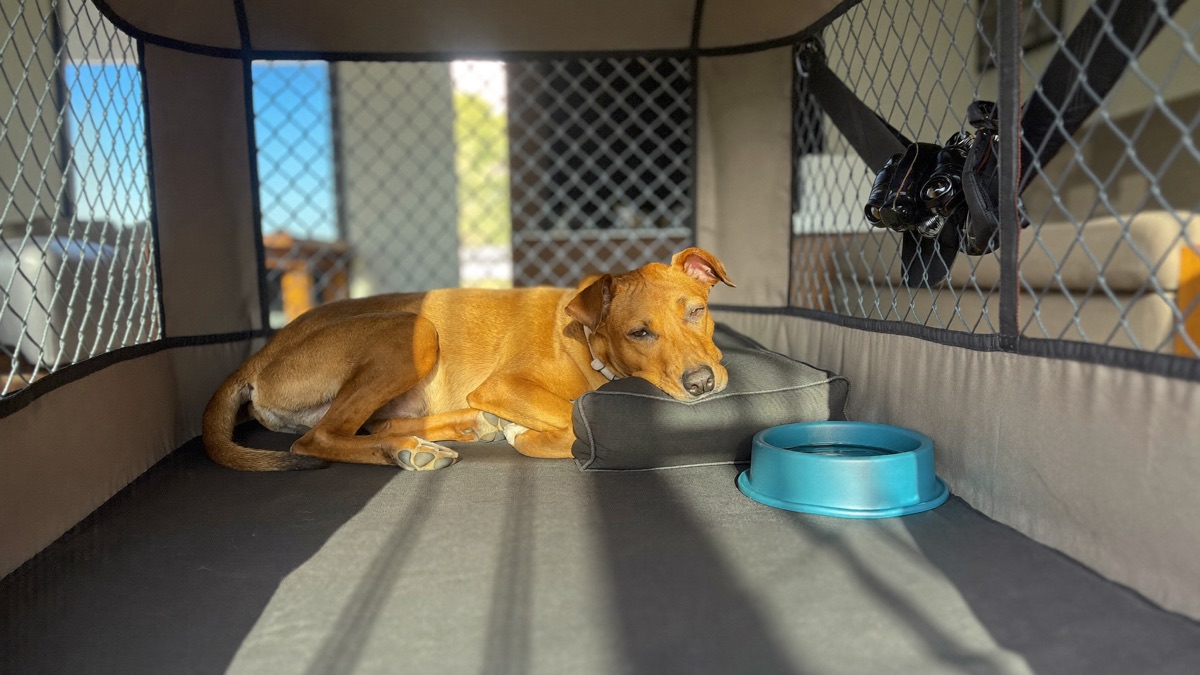
Flight travel. Airlines require dogs to fly in an IATA-compliant travel crate, and a dog that panics in crates cannot safely board a nine-hour cargo-hold flight. If an overseas move is even on your horizon, start open-crate rehab months ahead — the timeline in taking your dog overseas is long for paperwork reasons anyway, so run crate rehab in parallel from day one. The travel crate should become the dog's everyday den well before it ever sees an airport. For a dog whose crate panic won't shift despite careful work, talk to your vet about a veterinary behaviourist and, for unavoidable flights, about whether anti-anxiety medication is appropriate — sedation for flying is generally discouraged, which makes the behavioural groundwork the only real option.