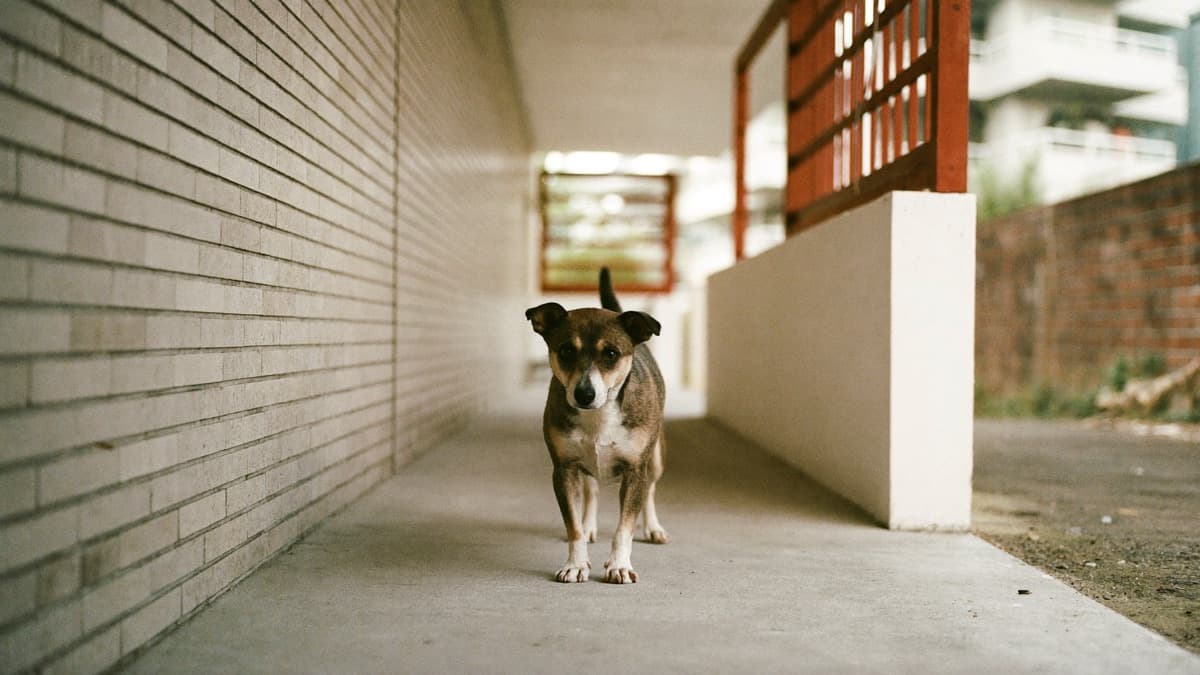
Why is my dog scared of strangers?
Usually a mix of genetics and a thin socialisation window. Puppies build their picture of "normal humans" mainly between about 3 and 14 weeks; a dog that met few unfamiliar people in that window — common for pandemic puppies, pet-shop puppies and many rescues — files strangers under "unknown, possibly dangerous" for life unless taught otherwise. Some dogs are also simply born more cautious, whatever their upbringing. Abuse is a far rarer cause than people assume.
Fear looks like more than hiding: barking with retreating, a low tail and pinned ears, refusing treats the dog normally loves, lip-licking and yawning at the visitor. Our dog body language guide covers the early signals, and the general stress picture is in dog anxiety signs.
Should strangers offer my dog their hand to sniff?
No — retire this myth. The outstretched hand feels polite to humans, but to a fearful dog it's a stranger looming closer and reaching into its space, the exact thing it's afraid of. Dogs can smell a person perfectly well from across the room; nobody needs to deliver their hand for inspection.
The rule that replaces it: no forced greetings, ever. The stranger's job is to be boring — no eye contact, no reaching, no baby talk, side-on body, attention elsewhere. If the dog chooses to sniff them, they carry on ignoring it. Choice is the entire mechanism: every approach the dog makes voluntarily and survives unharassed is a data point that strangers are safe; every ambush greeting is a data point that they're not, and that you won't intervene.
How does treat-and-retreat work?
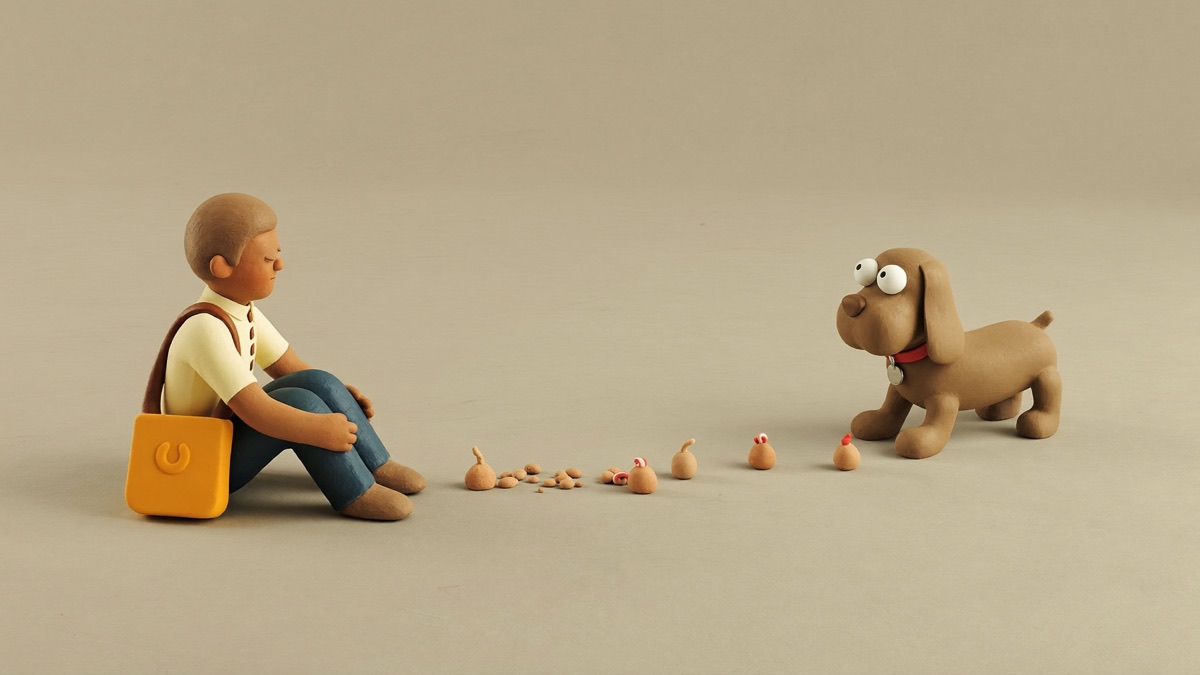
Treat-and-retreat, popularised by trainer Suzanne Clothier, uses food placement to give the dog approach and escape in the same rep — which is what makes it safe for fearful dogs:
- The visitor sits down (smaller, less threatening) and completely ignores the dog.
- The visitor tosses a treat past the dog, away from themselves. The dog retreats to eat it — moving away is rewarded, so the dog never feels trapped.
- The next treat lands slightly closer to the visitor, then another one further away again. The dog oscillates: approach, retreat, approach, retreat, always with an exit.
- Over minutes (or several visits), the comfortable radius shrinks — at the dog's pace, never by the visitor moving toward the dog.
The dog sets the speed. If it won't eat, it's over threshold: more distance, calmer room, try again later. Never lure a fearful dog all the way in with food held in the hand — food can pull a dog closer than it can emotionally handle, and that's when snaps happen.
What should I tell guests before they arrive?
Send the script in advance, because compliance drops sharply once a cute dog is in the room:
- "Please ignore the dog completely — no looking, talking or touching, even if she approaches you."
- "Sit down when you can, and toss treats away from yourself if I hand you some."
- "If she sniffs you, keep ignoring her. That's her interviewing you — let her finish."
- "Don't reach out your hand, and please don't follow her if she moves away."
One non-compliant guest ("but dogs love me!") can undo weeks of work. Be willing to enforce the rules on humans; the dog can't.
How do I manage visitors in a flat?
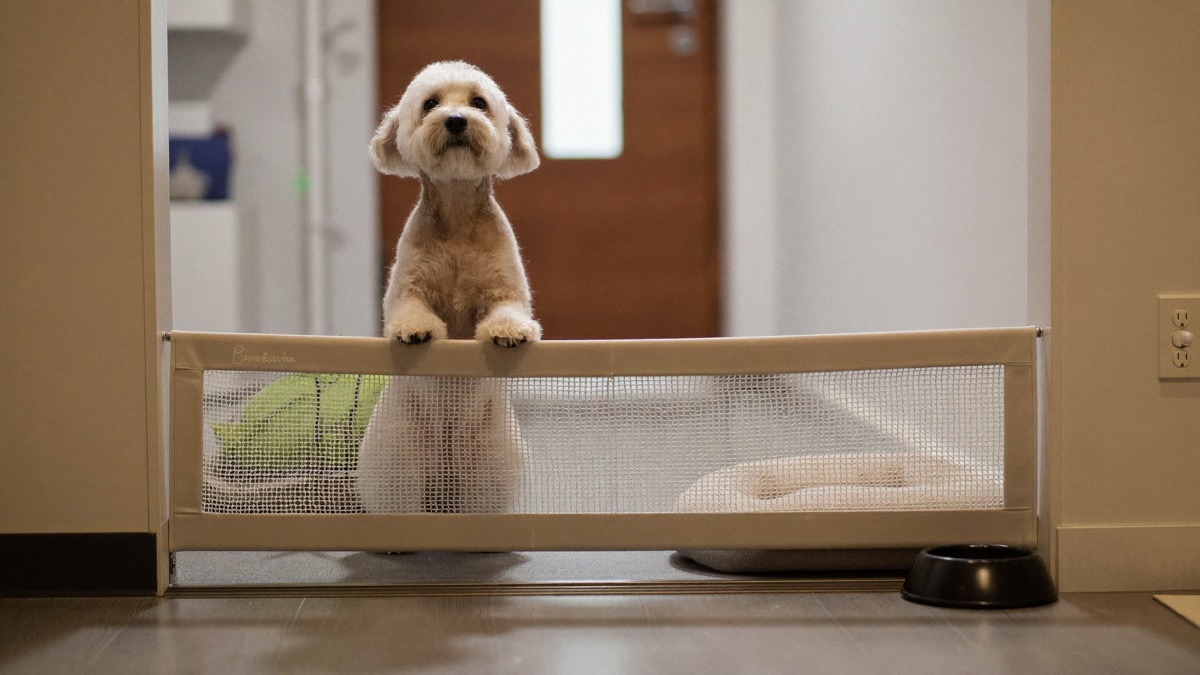
Management is not cheating — it's what prevents rehearsal of fear while training catches up. Set up a safe room (bedroom or bathroom with bed, water, a stuffed chew and background noise) for deliveries, contractors and parties, and a baby gate across a hallway so the dog can observe calm visitors from a distance without anyone reaching over it.
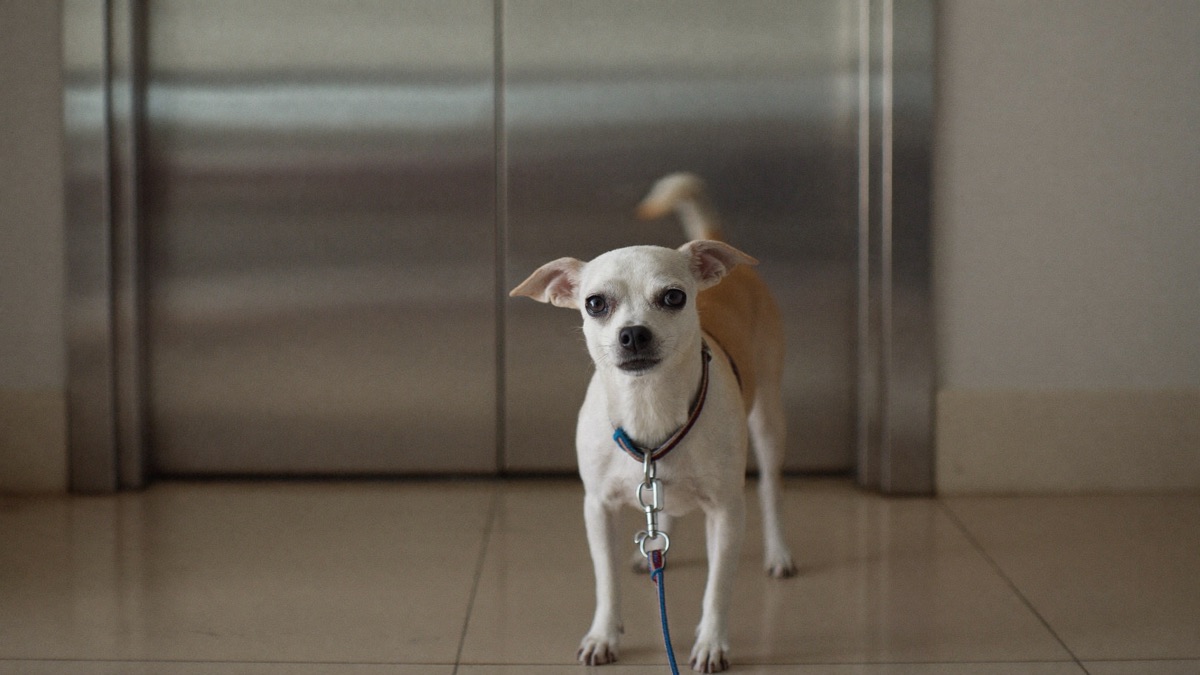
High-rise living stacks the deck: corridors, lift lobbies and void decks put strangers at close range with no escape route many times a day, so a stranger-wary dog in an HDB block meets its trigger constantly. Walk at quieter hours, cross to the far side of the corridor, and let the dog watch neighbours from a distance while treats happen — same game, outdoor edition. Skip a crowded lift rather than trapping a fearful dog in one.
When does fear tip into fear-aggression?
When distance-seeking fails often enough, dogs escalate: freezing, hard staring, growling, air-snapping, biting. If your dog has growled at, lunged at or snapped at a person, treat it as fear aggression — the same emotion, higher stakes — and get qualified help now rather than after an incident. In Singapore, start with the AVS-Accredited Certified Dog Trainer list and choose force-free help, or ask your vet for a veterinary behaviourist referral for bite-history cases. Punishing the barking or growling suppresses the warning, not the fear — and a fearful dog without warnings is a far more dangerous dog.