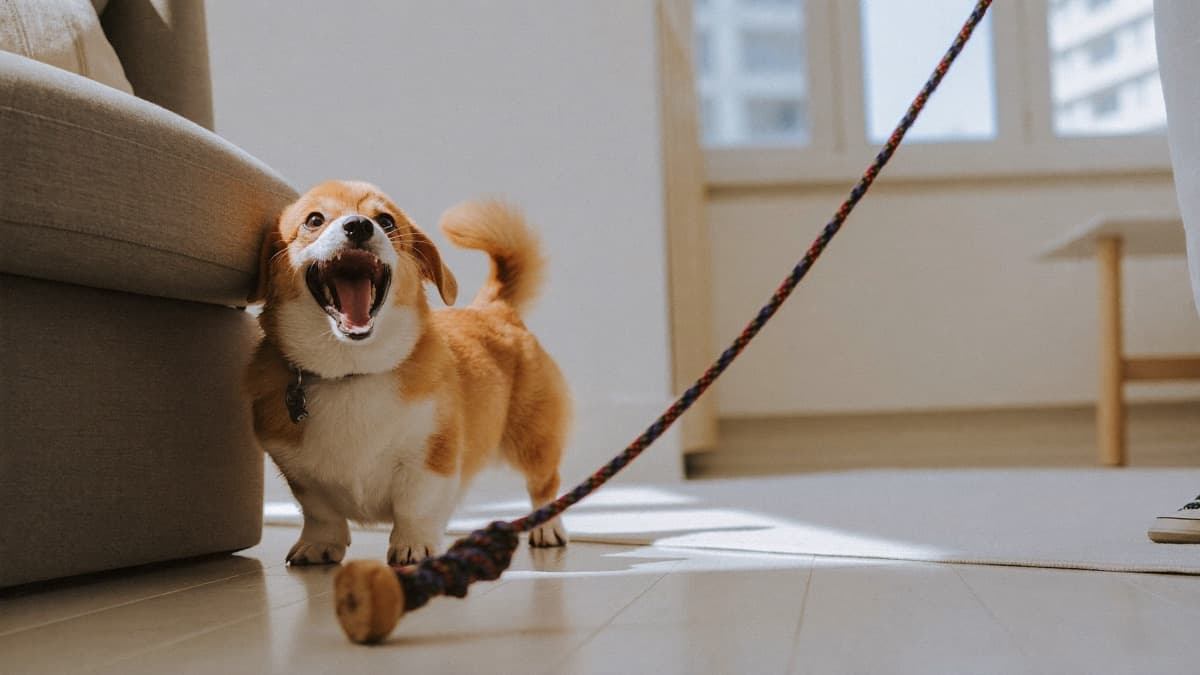
Why does my dog hump?
Let's deal with the embarrassment first: humping is one of the most normal behaviours in dogs. Puppies do it, females do it, neutered ten-year-olds do it. It only feels loaded because humans read it through a human lens.
The old explanation — "your dog is asserting dominance" — has been largely abandoned by behaviour scientists, and it deserves to be. Pet dogs mounting cushions, legs and housemates are not staging a coup. In the overwhelming majority of cases, mounting is one of three things:
- Arousal overflow. Excitement has to go somewhere. A dog wound up by visitors, play or anticipation discharges the extra energy through mounting, the same way other dogs discharge it through zoomies or grabbing the leash.
- Stress or displacement. Conflicted, anxious dogs sometimes hump the way nervous people bite their nails — it's self-soothing, not swagger.
- Play that boiled over. Mounting mid-wrestle usually means the game has tipped past the dog's ability to regulate itself.
Genuinely sexual mounting exists — mostly in intact males around females in season — but it's the minority of what owners actually see. Once you stop reading humping as a power move or a perversion, the fix becomes straightforward: it's an over-arousal problem, and you manage it like one.
What is the interrupt-and-redirect protocol?
Punishing humping adds stress to a behaviour that often runs on stress. Ignoring it lets the habit rehearse. The middle path is a calm, boring, consistent interrupt followed immediately by a redirect:
- Catch it early. Most dogs telegraph the moment — a certain fixated look, pawing or chin-resting on the other dog, sidling up to the cushion. Interrupting at the wind-up is ten times easier than mid-hump.
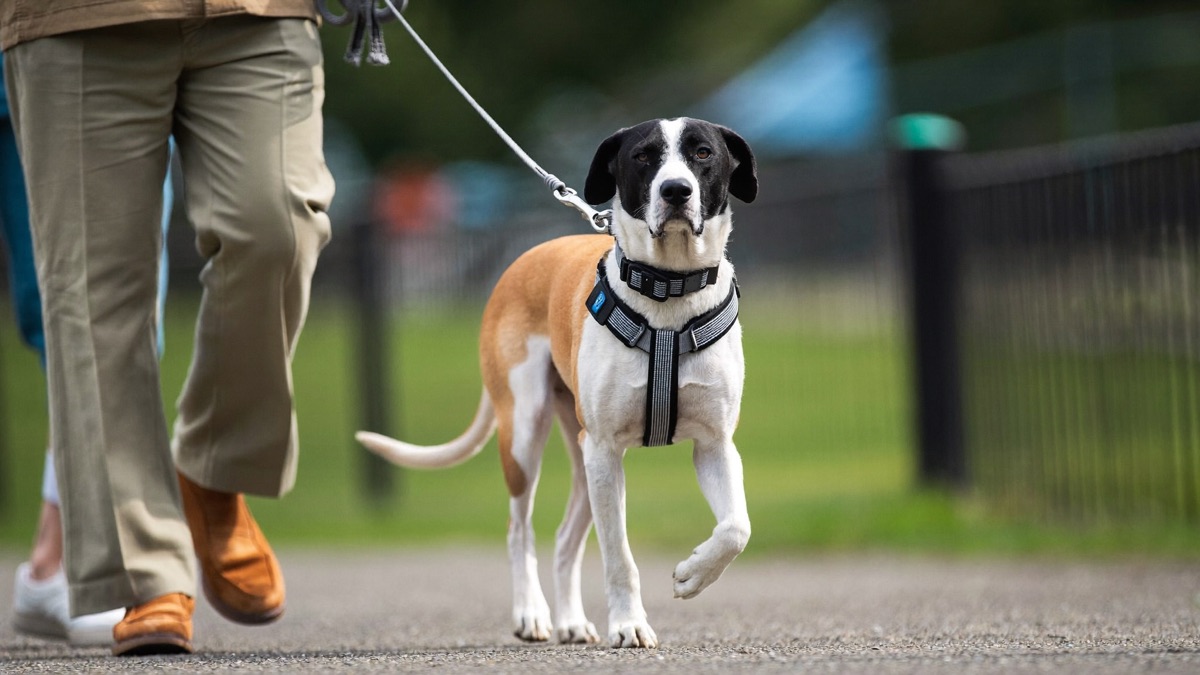
- Interrupt neutrally. A cheerful name-call, a clap, or simply walking over and leading the dog away by the harness. No shouting, no shoving — drama raises arousal, and arousal is the fuel.
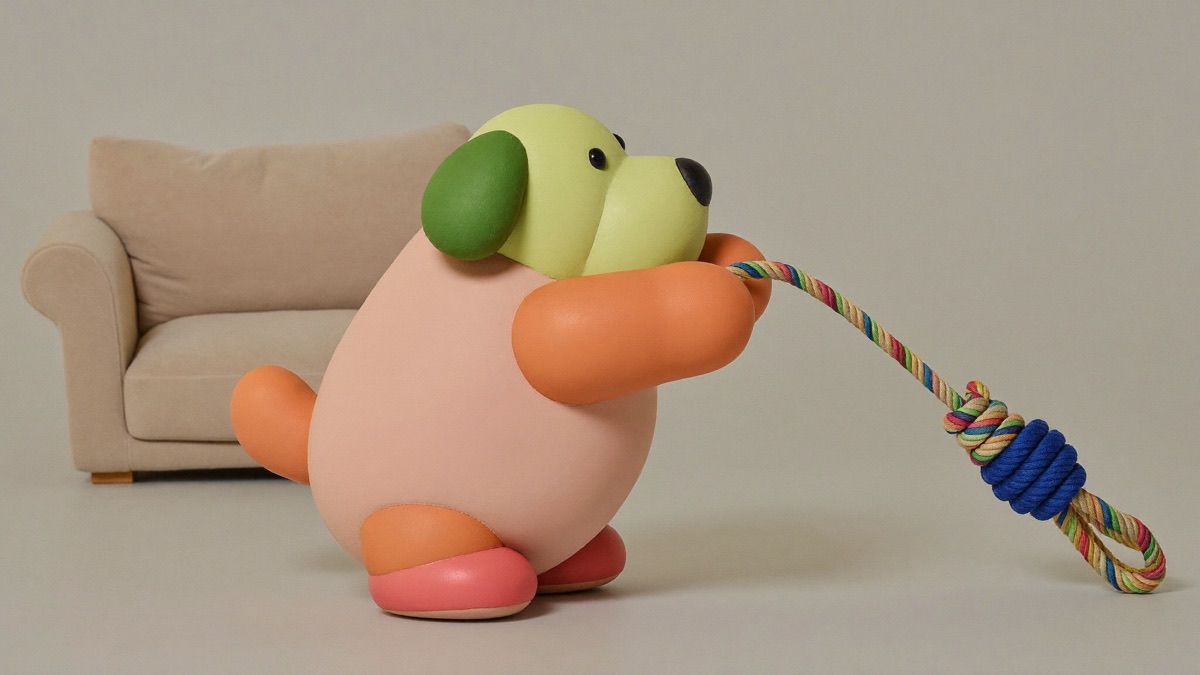
- Redirect to something incompatible. A tug toy, a treat scatter on the floor, a sit or a mat cue. The dog cannot hump and tug at the same time; you're giving the energy a legal exit.
- Lower the temperature. If humping restarts within a minute or two, the environment is too exciting — end the play session, move the dog to a quieter room, or leave the park. That's not punishment; it's turning the tap down.
Consistency matters more than technique. If humping works as a self-soother some days and gets interrupted on others, it persists. Every episode should end the same way: interrupted early, redirected, arousal lowered.
When does humping spike?
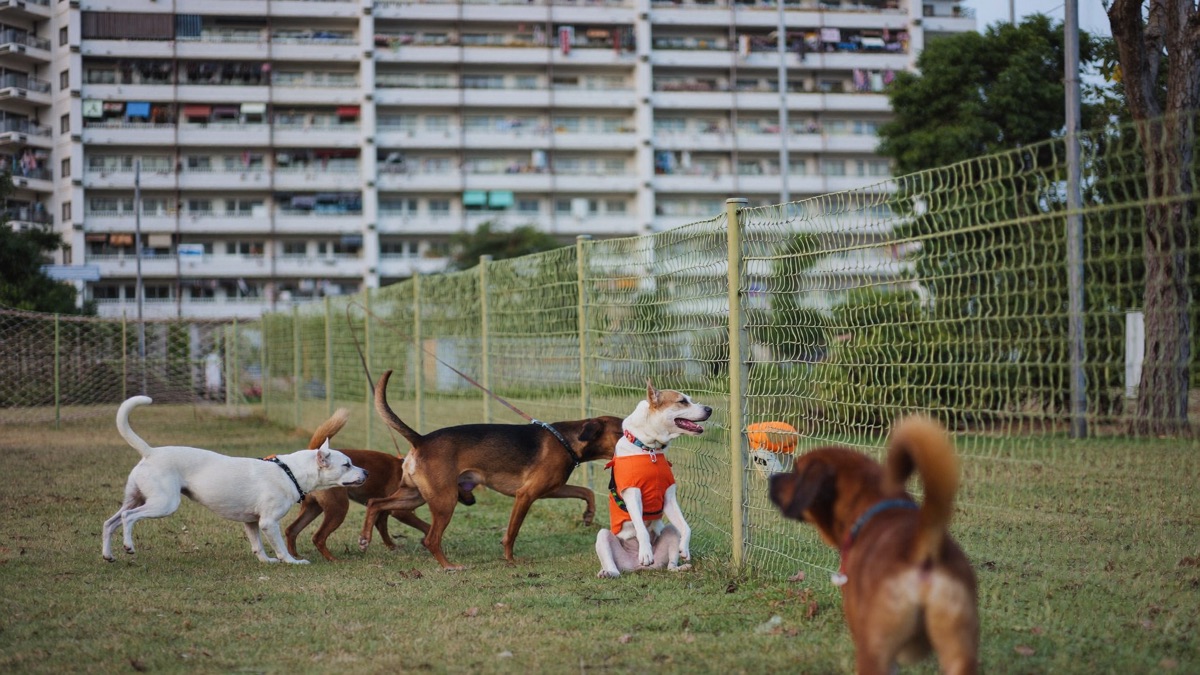
Predictably: whenever arousal spikes. Visitors at the door, the first ten minutes of a play date, dog parks and daycare, family gatherings, post-bath madness. If you map your dog's humping episodes, you'll almost always find them stacked on top of excitement or stress that was already running high — which is why a dog who never humps at home does it relentlessly at the dog run.
That stacking effect is worth understanding, because the real fix is often upstream: fewer triggers piled on top of each other, more decompression between exciting events. Our guide to trigger stacking explains how arousal accumulates across a day and why the third exciting thing — not the humping itself — is the actual problem.
Will neutering stop the humping?
Sometimes, partially — and it's worth being honest about the odds. Neutering reliably reduces mounting that is genuinely testosterone-driven: an intact male humping around females in season, or roaming-and-mounting behaviour that appeared at social maturity. For that subset, castration helps a majority of dogs, though rarely to zero.
But neutering does nothing for excitement humping, stress humping or play humping — which, again, is most of it. A neutered dog that humps cushions when visitors arrive will keep doing so until the arousal problem is addressed. If you're weighing the operation, do it on its full merits — health, roaming, marking, local licensing incentives — rather than as a humping cure. Our guide to neutering your dog covers the trade-offs honestly.
When is humping a medical problem?
A minority of cases — but the ones you shouldn't miss. Sudden-onset humping or genital licking in a dog that never did it before deserves a vet check, because irritation drives mounting-like behaviour. The usual suspects are urinary tract infections, skin allergies or infections around the groin, impacted anal glands, and priapism or other genital problems. A dog that humps and licks its genitals excessively, strains to urinate or seems generally uncomfortable is telling you this isn't behavioural. Start with our guide to UTI signs in dogs — if anything there rings true, book the vet before you book the trainer.
Handled matter-of-factly — early interrupt, calm redirect, less stacked excitement, medical causes ruled out — humping fades into what it always was: an awkward but ordinary overflow valve, not a character flaw.