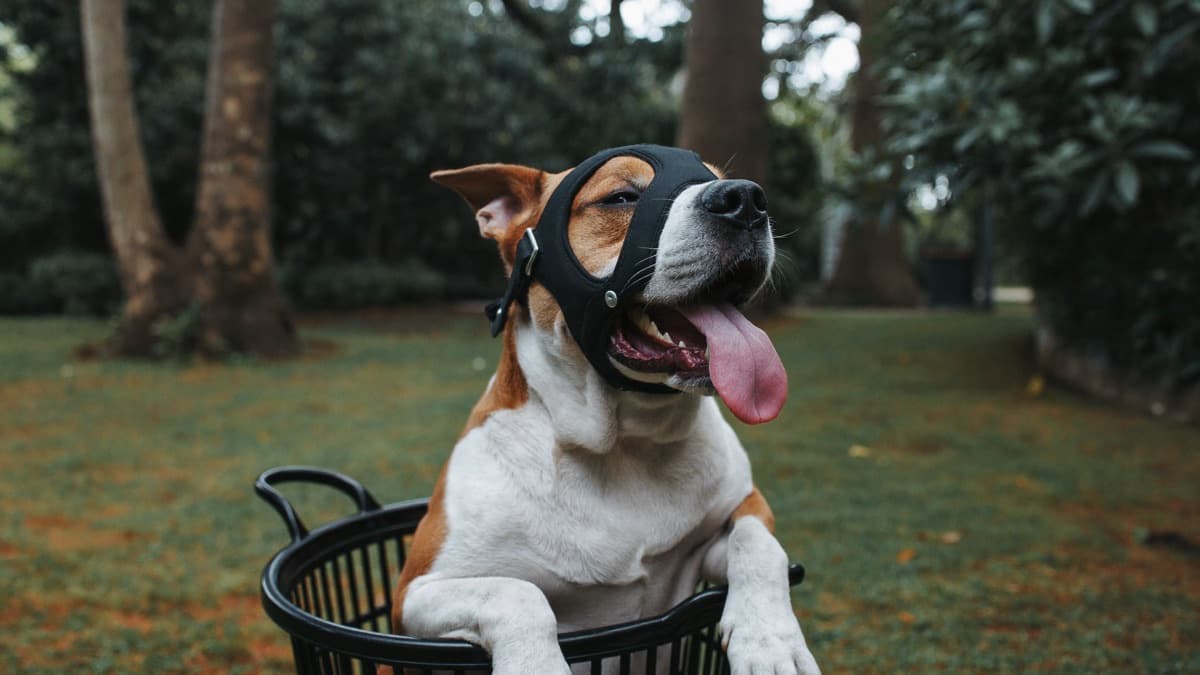
Why should a friendly dog be muzzle-trained?
Because the day a muzzle is needed is the worst possible day to introduce one. Pain changes dogs: a dog hit by a car or with a broken leg bites the hands trying to help, and vets routinely muzzle injured animals for everyone's safety. If the first muzzle experience is being pinned and strapped while already terrified and in pain, you've added trauma to injury. A muzzle-conditioned dog, by contrast, treats it as a familiar game in the middle of a bad day.
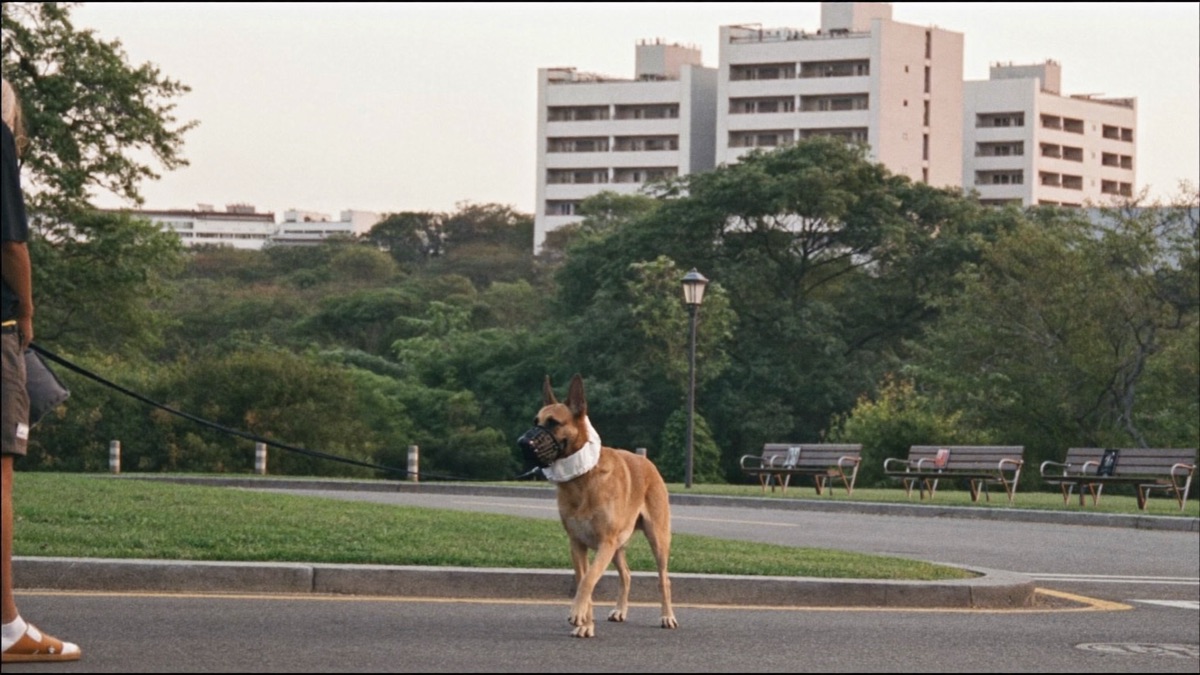
There's a legal reason too. In Singapore, scheduled ("specified") breeds — including the German Shepherd, Rottweiler and Dobermann — must be leashed and muzzled in public at all times, so for those owners muzzle comfort isn't optional, it's a daily welfare issue. Even for everyone else, groomers, boarding facilities and pet transport may require one. A dog that's relaxed in a muzzle keeps every door open.
Basket or sleeve muzzle — which one?
| Basket muzzle | Fabric sleeve muzzle | |
|---|---|---|
| Panting | Yes — full open-mouth pant | No — holds the mouth nearly shut |
| Drinking / treats | Yes, through the gaps | No |
| Safe duration | Walks and extended wear | Minutes only, under supervision |
| Best use | Public wear, training, daily life | Brief vet procedures |
| Typical price (as of 2026) | ~S$25–80 / RM40–120 | ~S$10–25 / RM15–40 |
In our climate this is not a style choice. Dogs cool themselves almost entirely by panting, and a sleeve muzzle that clamps the mouth shut removes that ability — in Singapore or Malaysia heat, that's a fast route to heatstroke. For anything longer than a few clinical minutes, basket only: rubber (Baskerville-style), silicone or wire, sized so the dog can open its mouth fully inside with a finger's width of clearance past the nose. If your dog runs hot generally, our guide to excessive panting covers the warning signs.
How does the peanut-butter conditioning ladder work?
The goal at every rung: the dog moves toward the muzzle, never the muzzle toward the dog. Smear xylitol-free peanut butter inside the basket and climb one rung per session or slower:
- Muzzle appears, treats rain. Muzzle goes away, treats stop. Five reps.
- Nose targets the outside. Any sniff or touch earns a treat.
- Nose dips inside to lick peanut butter smeared in the basket. The dog is feeding itself through the muzzle; you're just holding it like a cup.
- Duration. The nose stays in for a slow count — 2, 5, 10 seconds — while you feed through the gaps.
- Straps up, not fastened. Flip the strap over the neck while the nose is busy inside.
- Fasten for one second, feed, remove. Then 5 seconds, 30, a minute.
- Movement and life. Muzzle on for a few steps, then part of a walk, always paired with good things.
Any rung that produces pulling away means you climbed too fast — drop back two and pay better. Never trap the dog to "finish" a rep.

What must a muzzle never be used for?
Punishment — full stop. A muzzle strapped on after chewing or barking teaches the dog that muzzles predict your anger, undoing the training and adding fear to whatever caused the behaviour in the first place. A muzzle also doesn't treat anything: it prevents bite damage while you work on the underlying problem with a qualified professional, ideally an AVS-Accredited Certified Dog Trainer or a veterinary behaviourist for genuine aggression cases. And no muzzle replaces supervision — basket muzzles prevent bites, not fence-jumping, scavenging through the gaps, or fear itself.
What are the rules in Singapore?
Under AVS rules, specified dogs must be muzzled and leashed whenever they're in public — alongside licensing, third-party insurance and other conditions that come with scheduled breeds. Check the current AVS specified-dogs page before relying on details, because conditions can change. For every other breed, a muzzle in public is entirely legal and increasingly unremarkable; the "muzzled dog = bad dog" stigma is fading as more owners train it as the life skill it is. If you see a muzzled dog at the park connector, you're most likely looking at one of the better-trained dogs there.