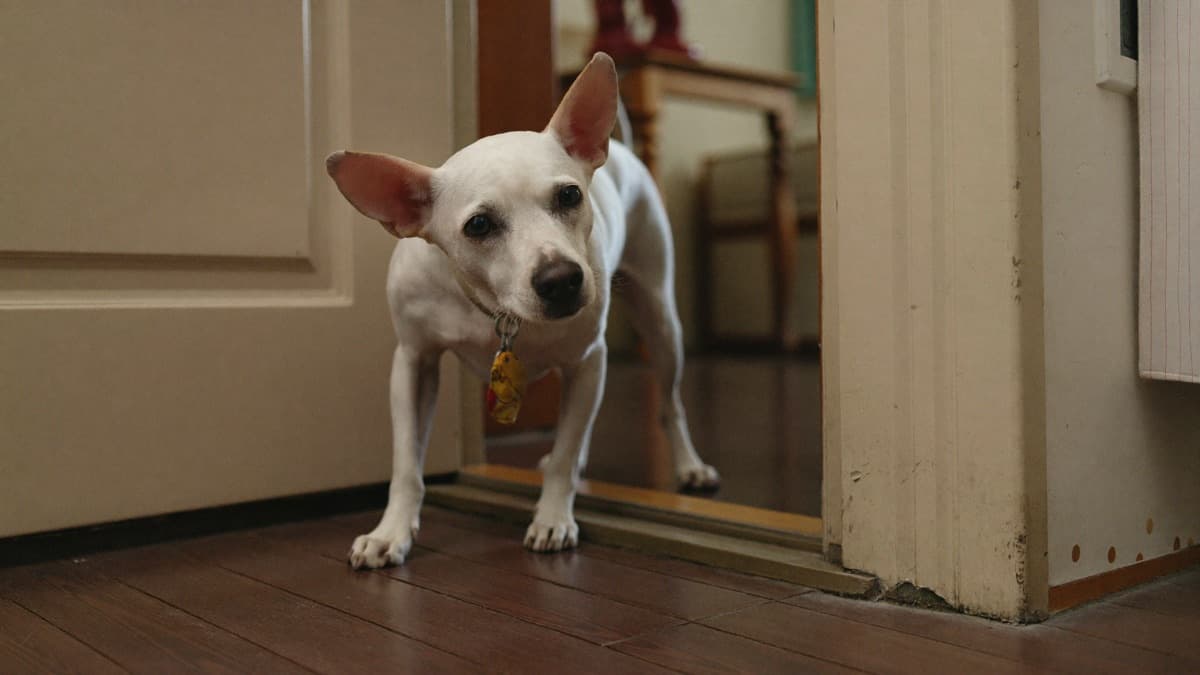
Was my dog abused by a man?
Almost certainly not — and this assumption, however sympathetic, points owners at the wrong problem. The maths is simple: fear of men is extremely common in dogs, while abuse specifically by men is comparatively rare, and under-socialised dogs with completely benign histories show exactly the same pattern. A puppy raised in a kennel, farm or pet shop that mostly met women — the majority of shelter staff, fosterers and volunteers are women — arrives in adulthood having barely banked any safe experiences of men. That's a data gap, not a trauma file.
Why does the distinction matter? Because "he was abused" nudges people towards pity-driven mistakes: flooding the dog with male attention to "show him men are kind", or excusing escalating behaviour instead of training it. The honest framing — "he didn't meet enough men as a puppy, so men are unknown and scary" — leads straight to the correct plan. And usefully, the plan is identical even in the rare case where mistreatment did happen.
Why are men scarier than women to dogs?
Not because of anything men do wrong — because of stimulus features dogs weigh heavily:
- Size. Men are on average taller and broader, and loom larger over a dog.
- Deep voices. Low-frequency sound reads as more threatening across most of the animal kingdom; a booming "HELLO BUDDY!" lands very differently from a soft greeting.
- Beards and hats hide facial features dogs use to read intent, making faces harder to parse.
- Movement style. Longer strides, more direct approach angles, more front-on posture, more direct eye contact.
- Novelty itself. If the dog's safe-human library is mostly women, every male feature is one more unfamiliar variable.
This is also why many "scared of men" dogs are really scared of a cluster: tall people, deep voices, hats, sunglasses, big parcels. Watch what specifically triggers your dog — see dog body language for the early stress signals — because that list becomes your training syllabus.
What is the no-approach protocol for men in the household?
The counterintuitive rule that fixes most cases: the man never approaches, never reaches, never looms — the dog does all the approaching. For the husband, boyfriend, father or flatmate the dog fears, the protocol is:
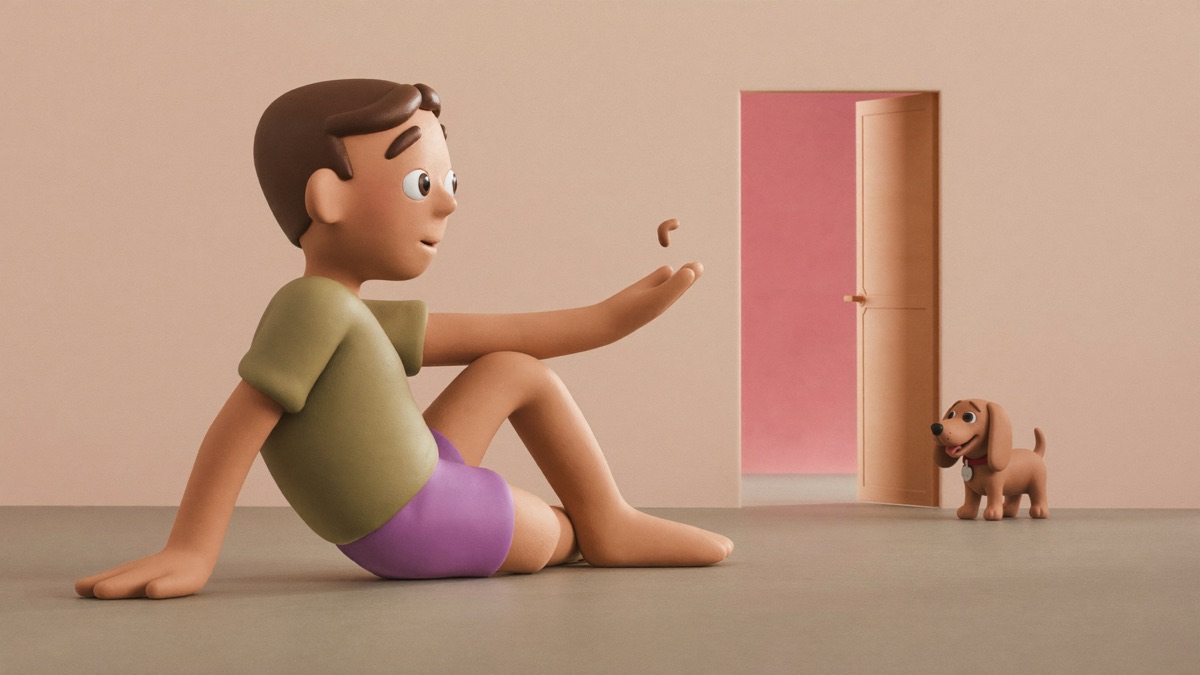
- Become furniture. Sit down — floor or low chair, side-on, no eye contact, quiet or softly spoken. Sitting removes the two biggest threat features, height and approach.
- Treats fall from the sky. Toss high-value food gently to the side or behind the dog, without looking at it. Never hold food out to lure the dog in — luring pulls dogs past their comfort point and produces snatch-and-panic greetings.
- Ignore every approach. When the dog sniffs him, he does nothing. No "good boy!", no slow hand to pet — nothing. The dog is gathering data; interruptions reset the file.
- Let the dog own the pace. First petting happens weeks later, when the dog is nudging, leaning, and soliciting — chest and side, never over the head, and stop after three seconds to let the dog vote on more.
- Meanwhile, he becomes the source of everything good at distance: he puts the food bowl down and walks away, he clips the lead for the walk the dog loves, he throws the ball.
The loom is the great mistake to engineer out: bending over a small dog from full height is the single most threatening posture a big human can adopt. Crouch side-on or sit; never bend over the dog.
How long does this take?
Longer than the internet implies, and honesty here saves relationships with the dog. A mildly wary adolescent might warm to a housemate in two or three weeks; a poorly socialised adult rescue commonly needs two to six months to reach relaxed coexistence, and may stay reserved with unfamiliar men indefinitely — friendly with "her" men, neutral with the rest. Neutral is a win. Progress also isn't linear: expect plateaus, and a fright (a shout, a fall, a vet visit) can knock things back a fortnight. The clock only truly resets when someone breaks protocol and forces contact.
When should I get professional help?
Bring in help early if the dog growls, snaps or lunges at men, can't recover within minutes of seeing one, or shows no progress after six to eight weeks of honest protocol work. Start force-free: in Singapore, the AVS-Accredited Certified Dog Trainer list is the vetted starting point (private sessions roughly S$120–250 / RM150–400 as of 2026), and ask your vet about a veterinary behaviourist referral if there's a bite history or the fear is broad and severe — escalation towards fear aggression is exactly the point where DIY stops. If you're raising a puppy now, the cheapest fix ever invented is proper socialisation: calm, treat-paired meetings with many kinds of men before 14 weeks.