Why is my dog scared of the vet?
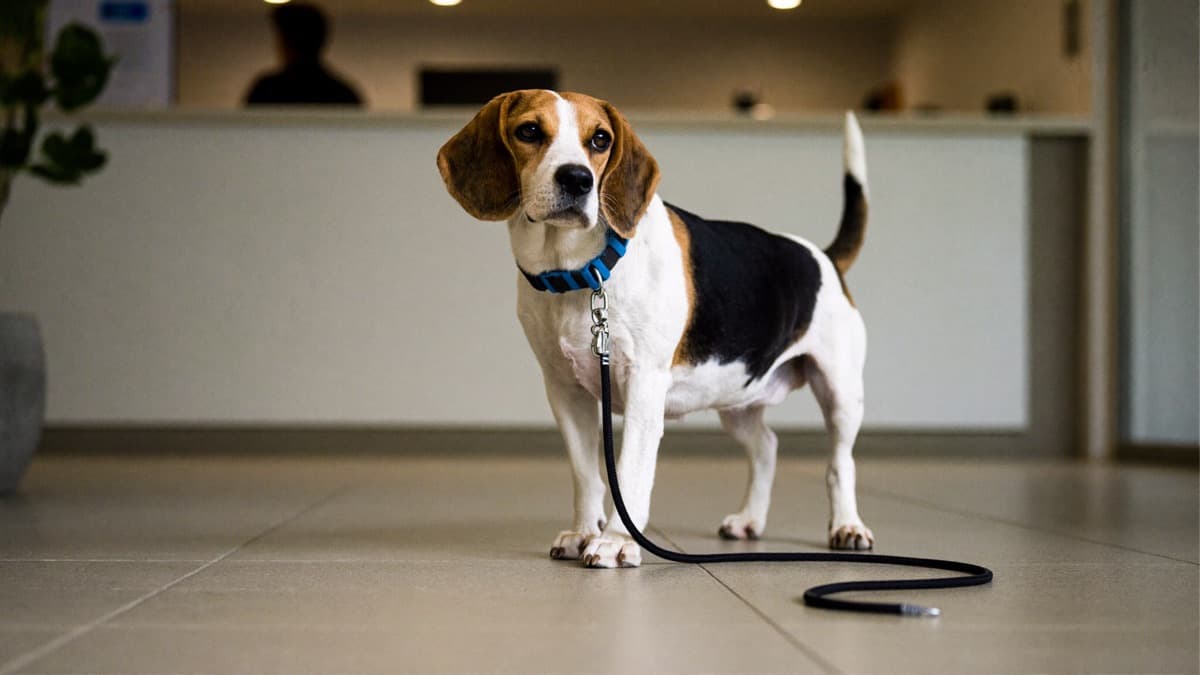
Because the maths is against the clinic. Most dogs only ever go when something unpleasant is about to happen — an injection, a thermometer, an examination while ill and sore. Dogs are superb at one-trial learning about danger, so a single painful visit can colour the car park, the door, the smell of disinfectant and the sound of the reception bell. Add the alarm pheromones left behind by every frightened animal before yours, and a dog can be trembling before you've touched the door. Trembling, lip-licking, yawning and a tucked tail at the clinic door are the early warnings; a dog that freezes, scrambles or snaps on the table is long past them.
What is a happy visit and how do I run one?
A happy visit is a clinic trip where nothing clinical happens. Done often enough, it rebalances the maths so the building mostly predicts good things.
- Phone ahead. Ask reception if you can pop in at a quiet time for a treat visit — most Singapore and Malaysia clinics welcome it, because a calm patient makes their day easier too.
- Walk in, feed something spectacular — chicken, cheese, not everyday kibble — the moment paws cross the threshold.
- Stay one to three minutes. Let staff toss a treat if your dog is willing. No handling, no table.
- Leave while it's still going well. Ending early is the point.
- Repeat weekly, or more often if the clinic is on a regular walking route.
Progress at your dog's pace: some need a week of treats in the car park before the door is possible. When a real appointment comes, book it in the middle of a run of happy visits so it's one bad data point among many good ones.
Why does the waiting room make everything worse?
Because it stacks triggers. A strange place, barking dogs, a yowling cat carrier, slippery floors, a stranger reaching over — each alone might be manageable, but they add up in the dog's nervous system until one small extra push tips it over threshold. That pile-up is trigger stacking, and it's why a dog that "was fine a minute ago" explodes at the nurse. Sidestep the stack: wait outside or in a cool car and ask reception to call your mobile when the room is ready, book the first appointment of the day before the smells and noise accumulate, and keep your dog on your lap or mat rather than nose-to-nose with other stressed patients.
What handling requests can I make at the clinic?
More than most owners realise. Fear-free style handling is increasingly standard, and reasonable requests include: examining the dog on the floor or your lap instead of the steel table; letting your dog lick a smear of xylitol-free peanut butter or squeeze cheese throughout the exam; doing the scary bits last so the visit isn't front-loaded with restraint; taking a short break if your dog stops eating (a dog too scared to eat is over threshold); and having you hold your dog where safe rather than a stranger. If a clinic treats these requests as unreasonable, it's worth trying another — attitudes vary between clinics, and our vaccination cost guide covers what routine visits involve across Singapore and Malaysia.

Should my dog be muzzle-trained before it needs one?
Yes — every dog, and especially a fearful one. If your dog is ever in pain, a muzzle is likely, and the worst possible time to meet one is while already terrified on a clinic table. A dog that has learned at home to push its own nose into a basket muzzle for peanut butter treats the muzzle as a familiar game on a bad day, not a final betrayal. Our muzzle training guide has the full conditioning ladder; a fortnight of daily two-minute sessions is usually enough to start.
When is it time to talk about pre-visit medication?
When your dog can't eat at the clinic despite several happy visits, or panics so hard that handling is unsafe. Vets commonly prescribe gabapentin, sometimes with trazodone, given at home an hour or two before the visit — not to sedate the dog flat, but to lower panic enough that learning becomes possible. It's prescription-only, dosed for your individual dog, and usually trialled at home first so you know how yours responds. Asking about it early is kinder than forcing a terrified dog through visit after visit; many dogs need it for a handful of appointments and then graduate to treats alone.