Is it marking or a toilet-training problem?
The distinction decides everything you do next, so make it first.
| Sign | Marking | Toileting accident |
|---|---|---|
| Amount | Small squirt, bladder not emptied | Full puddle |
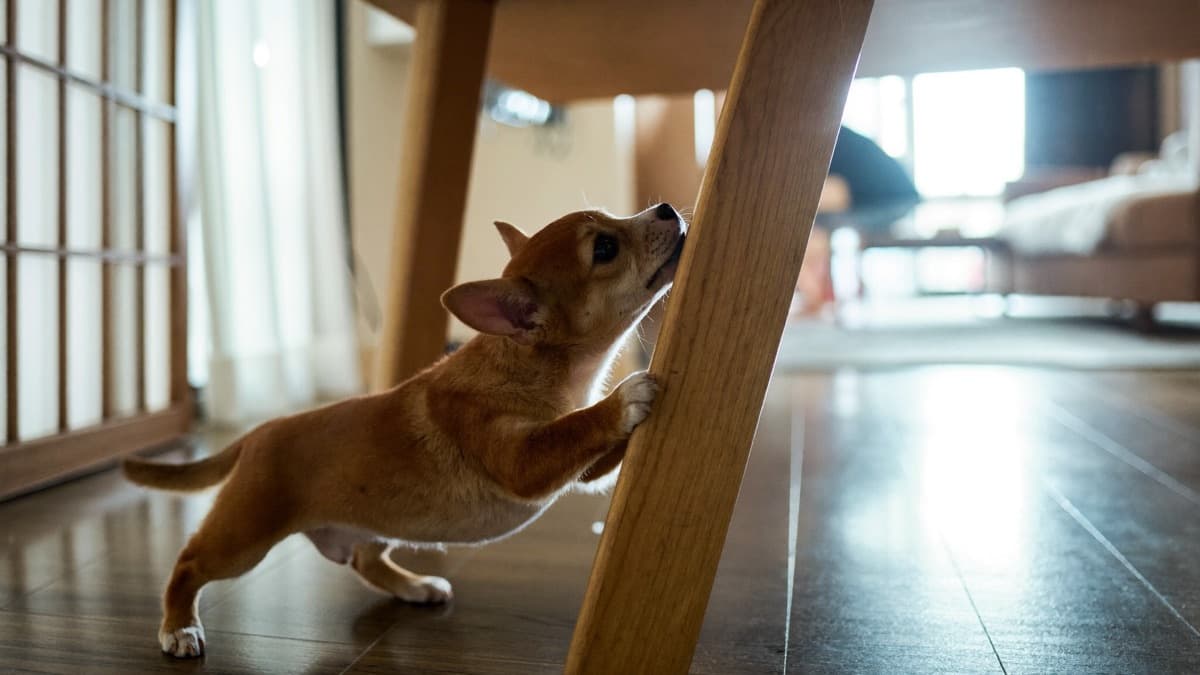
| Target | Vertical or significant: table legs, sofa corners, curtains, new items, bags | Horizontal floor, often hidden spots |
| Posture | Leg lift or quick cock (some females mark too) | Full squat |
| Who | Most common in intact males; any dog can | Any dog, especially puppies |
| Pattern | Otherwise toilet-trained; marks after changes or visitors | Toileting generally unreliable |
A dog leaving 10-cent-coin volumes against your dining table leg while reliably toileting outdoors is marking. A dog emptying its bladder behind the sofa has a toilet-training gap or a medical issue — different playbook, covered in our guide to toilet training in an apartment.
Why must medical causes be ruled out first?
Because urine problems are one of the most common ways illness announces itself, and no amount of training fixes a bladder infection. Before treating this as behaviour, see the vet if the marking is new, has suddenly increased, or comes with straining, frequent small urinations, licking, accidents overnight or any blood — see our guide to UTI signs in dogs. UTIs, bladder stones, and in older dogs kidney issues or cognitive decline can all masquerade as "marking". A quick urine test is cheap; six weeks of failed training on top of an untreated infection is not.
Why is enzymatic cleaning non-negotiable?
Because to your dog, a marked spot that still smells of urine is a signpost that says "post your reply here". Household cleaners and disinfectants mask odour to human noses but leave the urine proteins fully legible to a dog's, and ammonia-based cleaners actually smell urine-adjacent — an invitation, not a deterrent.
The rule: every marked spot, including historical ones you've stopped noticing, gets cleaned with an enzymatic cleaner (widely available at pet shops in Singapore and Malaysia, roughly S$15-30 / RM40-90 a bottle as of 2026). Enzymes digest the compounds rather than covering them. Use a UV torch if you suspect old marks you can't see, saturate the spot rather than surface-wiping, and let it air-dry. Until the scent map is erased, you're training against the wall of your dog's own signage.
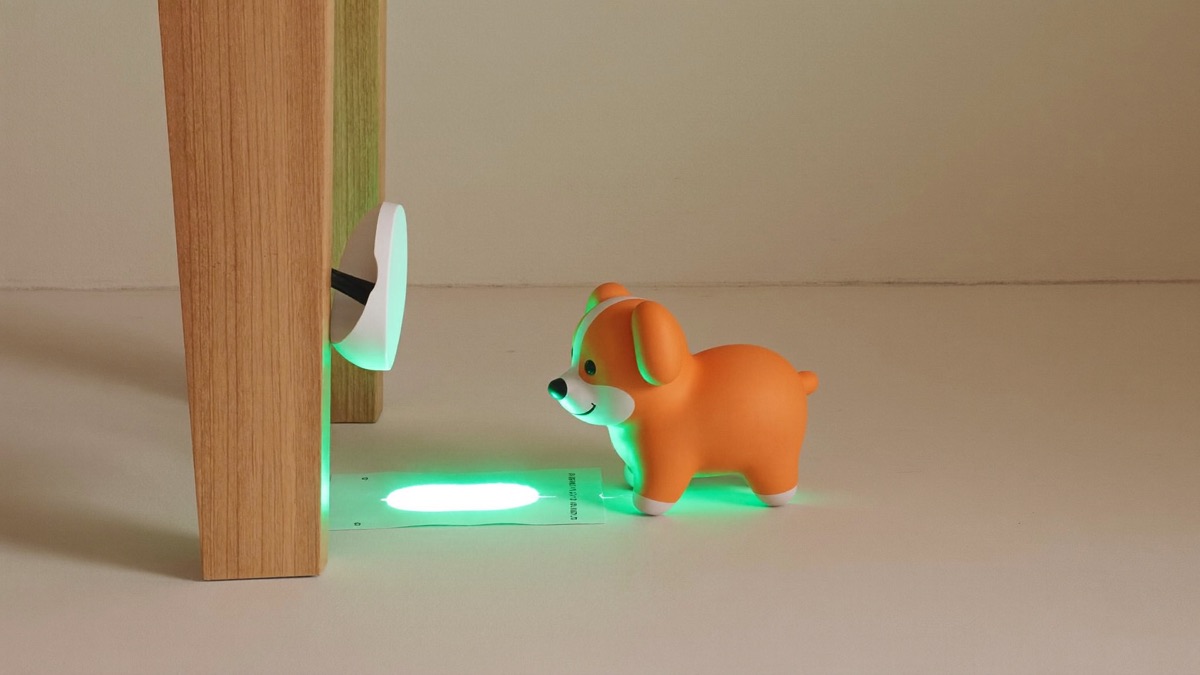
What triggers indoor marking?
Marking is a response to social and territorial uncertainty, so the triggers are usually changes:
- New objects with foreign smells — new furniture, a visitor's bag, shopping, boxes from a move.
- A new dog, cat or baby in the home — or even a new dog in a neighbouring flat whose scent drifts in.
- Renovation and rearrangement — familiar scent landmarks vanish, and some dogs re-label the territory.
- Visitors and their scents, especially visitors with pets of their own.
- Another pet's urine indoors — one accident by the puppy can start the older dog "replying".
You can't prevent life changing, but you can manage the window: when the new sofa arrives or the in-laws visit with their beagle, supervise closely for a few days, block access to previously marked zones, and interrupt-and-redirect any sniff-and-sidle at a likely target. Marking prevented from rehearsing during the trigger window often simply doesn't establish.

Do belly bands actually work?
Rated honestly: as management, yes; as a cure, no. A belly band is a wrap that holds an absorbent pad over a male dog's prepuce, so marking attempts soak the pad instead of your sofa. That protects the home and — usefully — stops each mark from refreshing the scent map. Most dogs also find marking into a band unsatisfying, which dampens the habit somewhat.
But the band doesn't change the motivation, and it comes with duties: change it promptly when wet or you trade furniture stains for urine scald and skin infection, and never treat it as a set-and-forget fix. Use it as a bridge during high-risk periods — renovations, a new dog settling in, retraining — while the real work happens.
Will neutering stop indoor marking?
Here the odds are genuinely good — better than for humping. Urine marking is one of the behaviours most consistently linked to testosterone, and castration substantially reduces or resolves indoor marking in the majority of intact males, sometimes within weeks. It is not a guarantee: a dog that has practised marking for years may continue out of habit, and stress-driven marking can persist in any dog. But if your intact male marks indoors, neutering is one of the few behaviour problems where surgery meaningfully shifts the odds — weigh it alongside the health considerations in our guide to neutering your dog, and keep doing the cleaning and management regardless.
Medical causes excluded, scent map erased, triggers managed, and — where relevant — neutering discussed with your vet: that combination stops most indoor marking. The dog was never being spiteful; it was answering messages you couldn't smell.