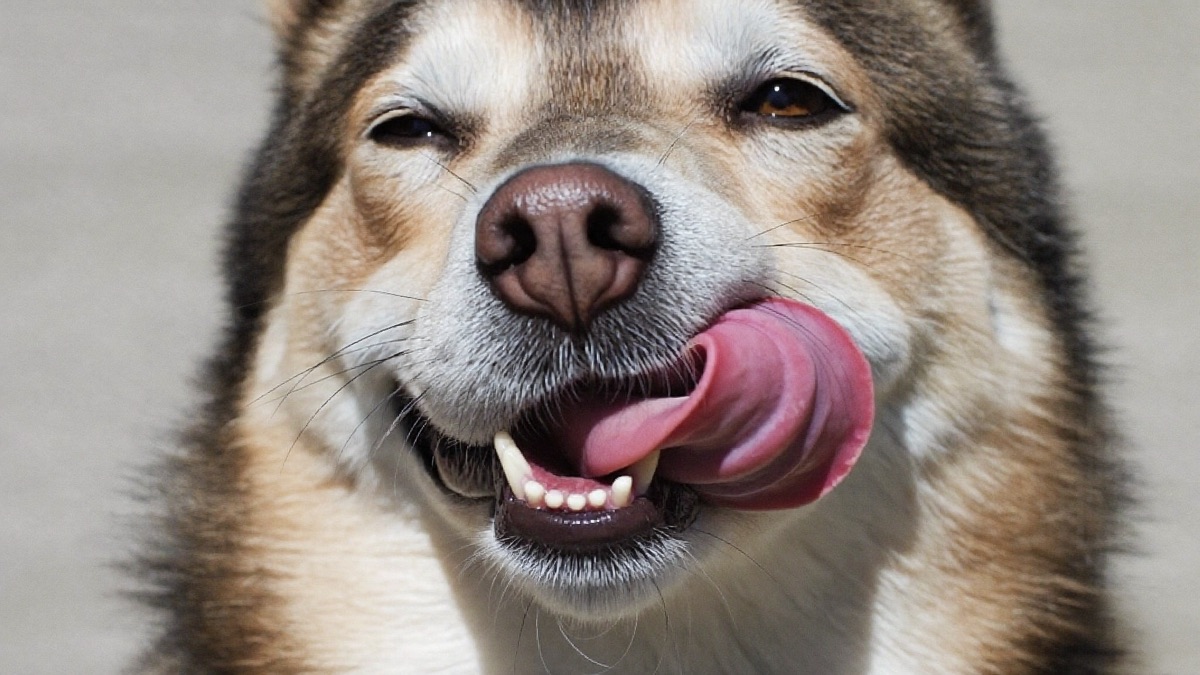
The licking itself makes everything worse: saliva keeps the skin damp, damp skin gets itchier and more infected, and the cycle feeds itself. So "wait and see" tends to mean "wait and worsen".
Is it allergies?
Start here, because paws are ground zero for allergic dogs. Environmental allergy (atopy) — dust mites, moulds, grasses and pollens — shows up in dogs not as sneezing but as itchy skin, and the paws, armpits, ears, and belly take the worst of it. A dog that licks all four paws, scratches its ears, and rubs its face is describing atopy almost perfectly. Food allergy produces the same itchy-paw picture and can't be told apart by looking; it needs a proper elimination diet to diagnose.
Two clues strengthen the allergy case: it involves more than one paw, and it flares and settles — worse after grass, worse in certain months, better on holiday. Our full guide to dog allergies walks through how vets narrow down the trigger and the treatment ladder, which in 2026 is far better than endless steroid cycles.
Why do the paws smell like corn chips?
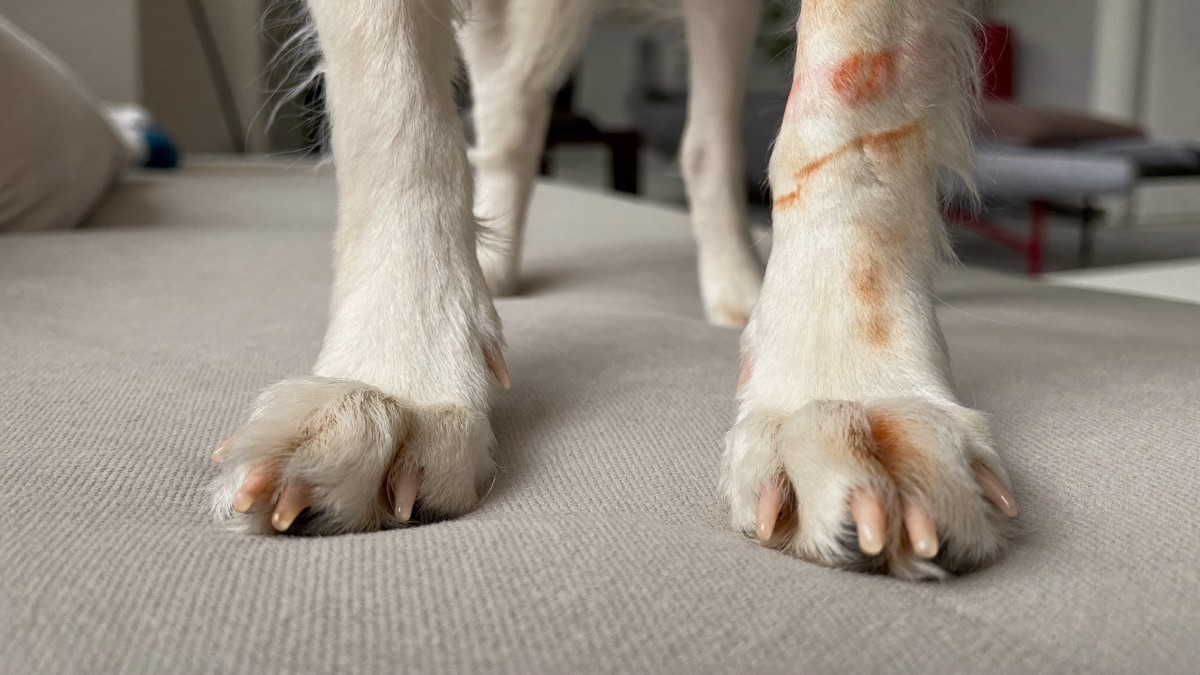
Lift the paw and sniff between the toes. A yeasty, corn-chip or musty smell — often with rust-brown skin, greasy residue, or brown nail beds — means Malassezia yeast has moved in. Yeast lives on normal dog skin; in Singapore and Malaysia's year-round humidity, the warm, damp pocket between the toes is a perfect incubator, and every rain-soaked walk or enthusiastic lick tops up the moisture.
Yeast rarely starts the problem — it exploits skin already inflamed by allergy or trapped dampness — but once established it itches ferociously in its own right, driving more licking, more moisture, more yeast. Breaking that loop usually takes vet-prescribed antifungal washes or wipes plus the boring, decisive habit: towel-dry paws after every wet walk, including between the toes. Our guide to skin problems in humid climates covers why tropical dogs fight this battle on permanent hard mode.
What does pink or rust staining on the paws mean?
On white and light-coated dogs, weeks of heavy licking leave a tell you can read from across the room: the fur on the paws turns pink, rust, or brown. That's porphyrin — an iron-containing compound in saliva that oxidises and stains, exactly like tear stains under the eyes. Stained paws are useful evidence: they tell you the licking is chronic, not occasional, even if your dog only does it at night when you're asleep. Don't bleach or trim the stain and call it solved — it will simply return until the reason for the licking is found.
Is my dog licking out of boredom or anxiety?
Some paw-licking is emotional, not itchy. Licking releases soothing endorphins, so an under-stimulated or anxious apartment dog can settle into paw-licking the way a person bites their nails — typically in the evening, when the household goes quiet, or during stress like storms and renovations. Suspect this pattern when the paws look and smell completely normal, the licking happens at predictable "empty" times, and it stops the moment something interesting happens.
The fix is outlets, not obstacles: proper sniff-heavy walks, food puzzles instead of bowls, training games — and honest stress-reduction if the licking clusters around triggers. Check the wider picture against our guide to anxiety signs in dogs, because boredom-licking and anxiety-licking look identical on the paw and completely different in the diary. One caution: licking any single spot can become compulsive if rehearsed for months, so emotional licking deserves attention too, not just a cone.
When is paw licking actually pain?
A dog that suddenly licks one paw is usually dealing with something local and physical: a thorn or grass seed, a torn or overgrown nail, a burned pad from hot pavement, an insect sting, or a cut. Inspect in good light — spread the toes, check each pad and the nail beds.
Licking can also point at deeper pain. Dogs lick over sore joints, so a senior that works on one wrist or ankle — especially with morning stiffness or reluctance on stairs — may be telling you about arthritis long before a limp appears. See our guide to arthritis signs in dogs if that pattern fits.
When should I see a vet about paw licking?
Book a visit if licking persists beyond a week, if paws are red, swollen, smelly, or stained, if your dog limps or chews rather than licks, or if one paw gets sudden intense attention. A standard consultation (typically S$40–80 in Singapore, RM50–150 in Malaysia as of 2026) with a skin scrape or cytology answers the allergy-vs-yeast question quickly — far cheaper than months of shampoos guessed at random. Between visits, keep paws clean and dry after walks; our paw care guide has the routine.